


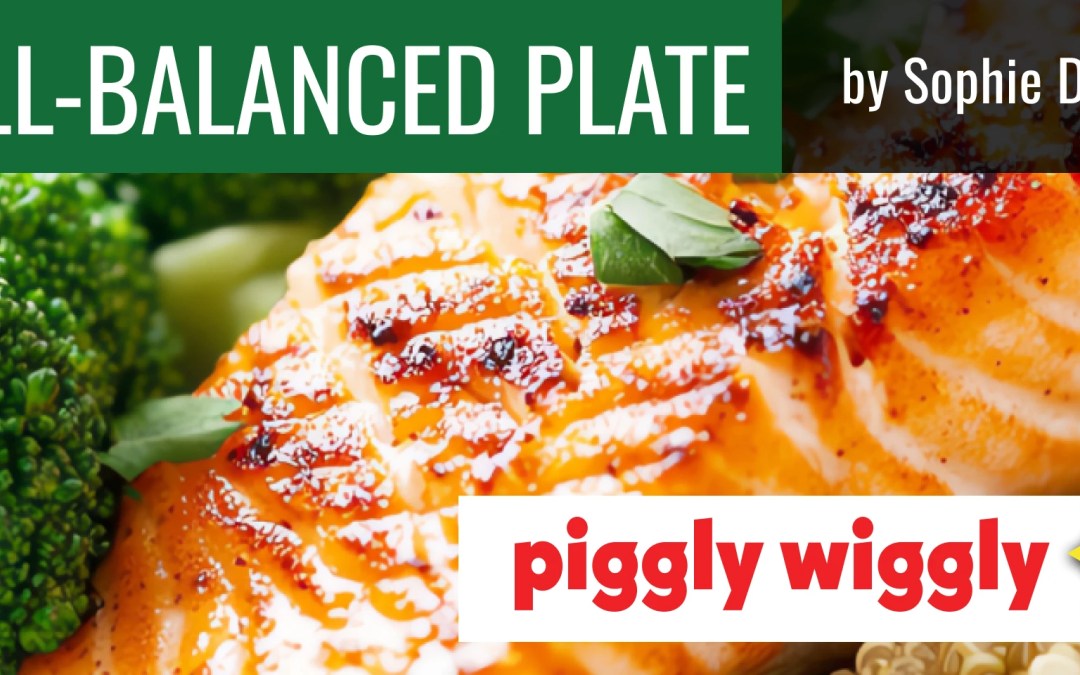
Our local nutrition expert, Sophie Dolan, MS/RDN, dives into the essentials of building ‘The Well-Balanced Plate’ in the latest installment of our Pro Tips series. As a registered dietitian, Sophie shares practical strategies to help you create meals that fuel your body and fit your lifestyle. She breaks down the key components of a balanced plate, emphasizing the importance of portioning proteins, carbs, and vegetables, and how mindful eating can support long-term health and vitality.

A well balanced plate consists of whole grains, vegetables and fruit, protein, and healthy fats. There are many reasons to make sure you have all of these things on your plate, here are a few:
- Eating this way ensures you are meeting your nutrient needs. (Think: vitamins, minerals, fiber, calcium, etc.)
- You will stay more full for longer
- You will manage your blood sugar better
- You will feel more satisfied throughout the day
Fruits and Vegetables

Fruits and vegetables should make up about half of your balanced plate. Fruits and veggies are high in fiber, which aids in digestion and keeps us more full. These foods are also loaded with vitamins, minerals, and antioxidants that are crucial for our bodies. Examples of non-starchy vegetables include: bell peppers, broccoli, brussel sprouts, cauliflower, green leafy vegetables, green beans, mushrooms, zucchini, and yellow squash.
Carbohydrates

One quarter of your plate should be a starchy carbohydrate, ideally one made with complex carbohydrates such as whole grain. Carbohydrates are the body’s main source of energy. Choosing complex carbohydrates will provide more fiber and longer lasting energy. Examples of complex carbohydrates include: brown rice, quinoa, oatmeal, millet, buckwheat, whole wheat pasta, butternut squash, sweet potatoes.
Protein

Protein should make up about a quarter of your balanced plate. Another way to think about it is the size of an open palm and thickness of a deck of cards. Protein is essential for maintaining, building, and repairing muscle. Sources of protein include: chicken, turkey, eggs, tofu, fish, shellfish, dairy products, beef and other meats, beans and legumes, nuts and seeds.
Healthy Fats
Healthy fat is important to incorporate into your meal; however, it does not need to be the main star. Typically, fat is added in naturally during the cooking process or salad dressing or butter/oil added to a starch. Sources of healthy fat include: olive oil, avocado oil, nuts, seeds, avocado, fish.
Balance is truly key to a sustainable healthy lifestyle. If you need help personalizing your plate specifically for your needs, please reach out to Sophie.
Follow Sophie on Instagram @sophiedolan.rd and here on thepigbham.com for professional yet approachable guidance to enhance your quality of life through nourishing and enjoyable meals. You can find Sophie’s professional practice at www.sophiedolannutrition.com.

This article is for educational purposes only, not to be taken as medical advice. Please consult with your healthcare team. Sophie Dolan is a Registered Dietitian Nutritionist based in Birmingham, AL, dedicated to making healthy eating both delicious and accessible. With a passion for hearty, colorful salads and a belief that all foods can fit into a balanced diet, Sophie offers expert nutrition advice and tasty recipes to Birmingham shoppers. She specializes in gastrointestinal health and weight management, promoting sustainable eating habits and personalized nutrition.