by Sophie Dolan, MS, RDN, LD
Hi Birmingham! I’m Sophie Dolan, MS, RDN, LD – Piggly Wiggly Birmingham’s nutrition expert – and I’m here to help you take the guesswork out of reading nutrition labels! Whether you’re trying to cut back on added sugar, boost your fiber intake, or choose healthier fats, understanding what’s in your food is key to making smart choices for your family.
What You’ll Learn in This Article:
By the end of this guide, you’ll be able to:
✅ Identify the key components of a nutrition label and what they mean.
✅ Understand serving sizes and how they affect calorie and nutrient intake.
✅ Distinguish between healthy vs. unhealthy fats.
✅ Recognize added sugars and fiber under total carbohydrates.
✅ Evaluate the % Daily Value (%DV) to determine if a product is high or low in certain nutrients.
✅ Make informed, healthier choices while shopping at Piggly Wiggly Birmingham.
What Is Considered the Nutrition Label?
The nutrition label is typically found on the back or side of the food package. It includes two main parts:
- The Nutrition Facts Panel: This section shows the macronutrient breakdown (protein, carbohydrates, and fats) and the micronutrient content (vitamins and minerals) of the product.
- The Ingredient List: Listed in descending order by weight, this list tells us exactly what has been added to the product—from the most prominent ingredient to the least.
As a dietitian, I consider the ingredient list to be the most important and informative part. For example, if sugar is one of the first few ingredients listed, we can assume the product is likely high in added sugar.
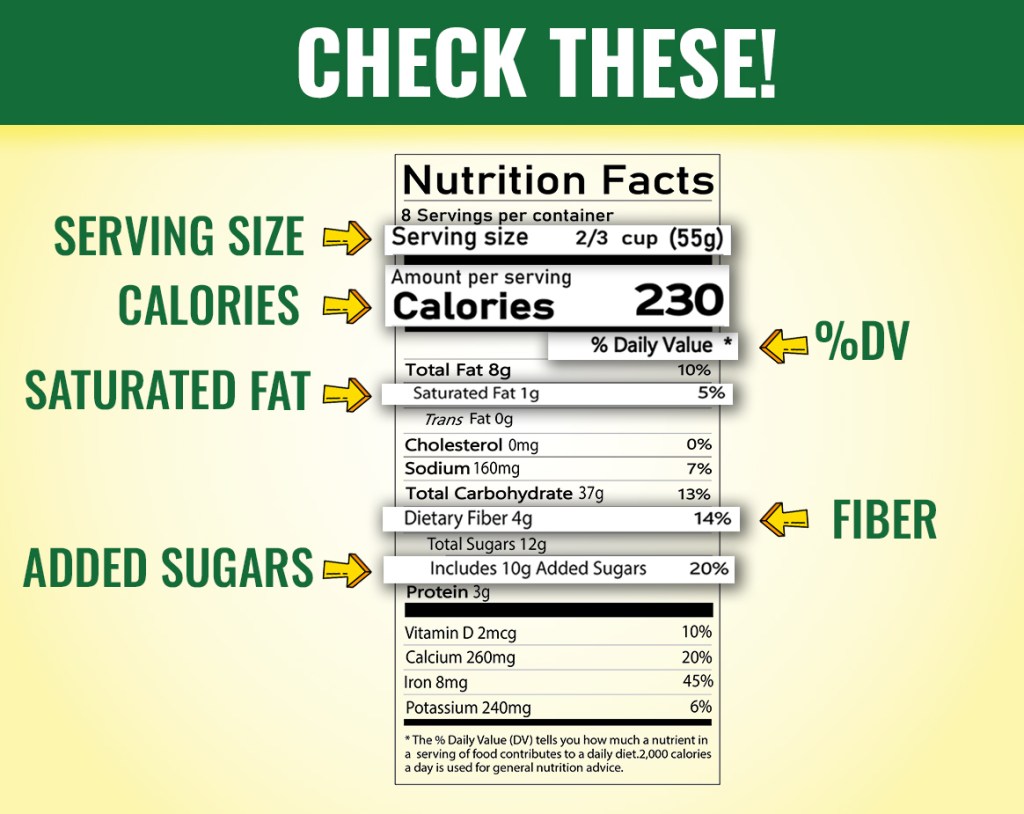
Understanding the Basics
1. Serving Size Comes First
First things first, we want to pay attention to the serving size listed at the very top of the nutrition facts panel. This tells us the portion size that the nutrition information provided is based on. For example, this may be:
- ½ cup of cereal
- 15 chips
- 350 grams of yogurt
⚠️ Important Note: The serving size is not necessarily the amount you are eating, nor is it a recommendation of how much you should be eating. It’s simply a reference for the listed nutritional values.
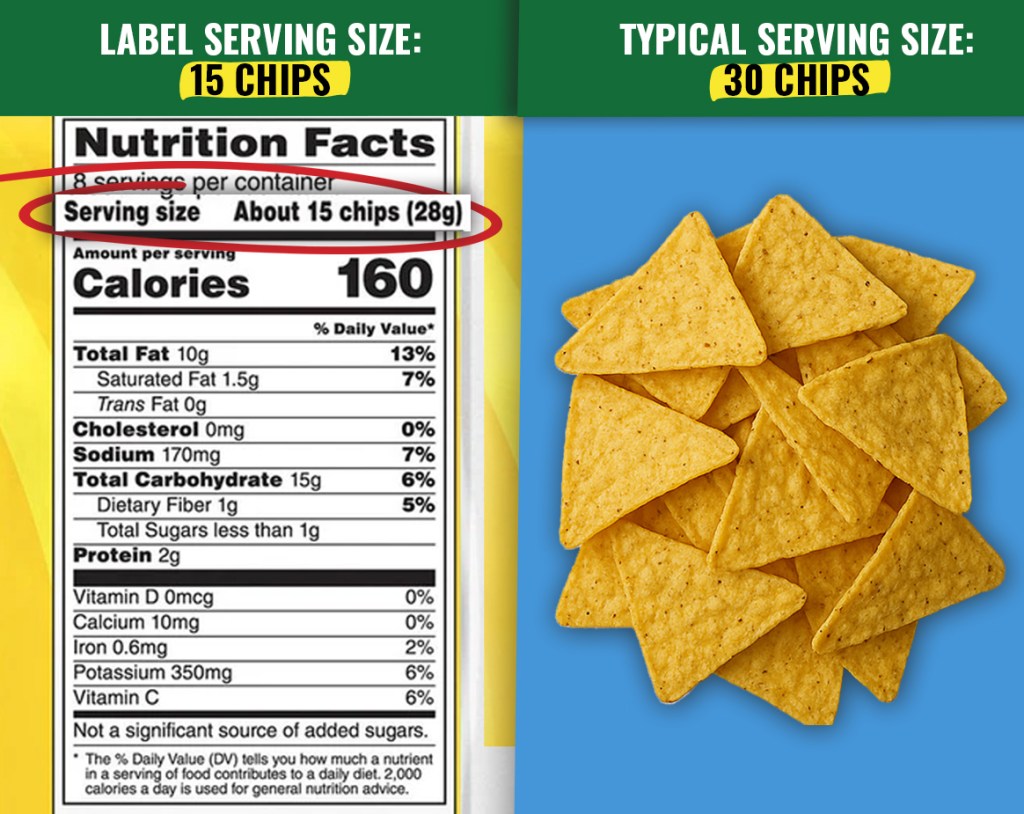
2. Calories: Where Are They Coming From?
The calories listed are for that specific serving size only. However, knowing just the calorie count isn’t super helpful. What we really want to know is, where are these calories coming from? So, we need to read on…
As a reminder, we get calories from our macronutrients:
- Carbohydrates – 4 calories per gram
- Proteins – 4 calories per gram
- Fats – 9 calories per gram
3. % Daily Value (%DV): How Much Is Too Much?
To the far right of the nutrition label, you’ll notice the %DV or Percent Daily Value. This tells us what percentage of the daily value for a particular nutrient is provided by one serving of the product.
The daily values are standard reference amounts used by the FDA and are based on a 2,000-calorie diet. We have daily values for all nutrients.
Here’s a quick guide to better understand %DV:
- 5% DV or less is considered low
- 20% DV or more is considered high
If you’re keeping an eye on sodium, saturated fat, or added sugars, aim for lower %DVs in these categories.
Macronutrients: Where Do the Calories Come From?
We get calories from our macronutrients: carbohydrates, proteins, and fats. The nutrition facts panel provides us with the total grams of fat, carbohydrate, and protein in each serving. For example, if there is 0g of fat listed, then that means the calories are coming from carbohydrates and protein.
Let’s break down how to better understand fats and carbohydrates.
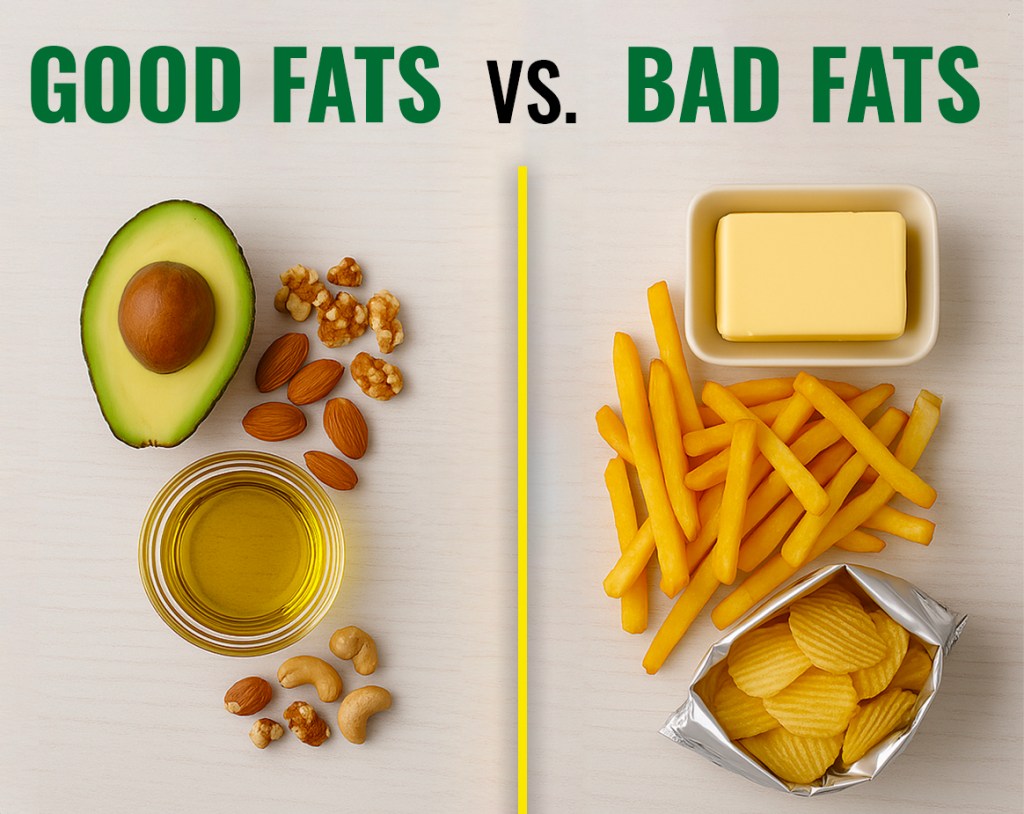
1. Fats: The Good, The Bad, and The Label
Not all fats are created equal, and thankfully, the nutrition facts go one step further to give us more information.
- Saturated Fat & Trans Fat: These fats are associated with poor heart health and should be limited. If any of the total fat is coming from these sources, it will be listed.
- Unsaturated Fat: If no saturated or trans fats are listed, we can assume the remaining fat is unsaturated, which is more beneficial for heart health.
2. Carbohydrates: Fiber, Sugar, and More
Underneath total carbohydrates, you’ll notice a breakdown that includes:
- Dietary Fiber: Aim for higher fiber content to support digestion and overall health.
- Total Sugars & Added Sugars: These give us more information about the quality of carbohydrates. The fiber and added sugar should NOT be added to the total carbohydrate value.
✅ Example:
If the total carbohydrate is 32g and of that, 3g is fiber and 8g is added sugar, the remaining 21g of carbohydrates is coming from starch. We want to choose carbohydrates that are rich in fiber and low in sugar whenever possible.

Micronutrients: Small but Mighty
The second half of the nutrition facts panel includes micronutrients—vitamins and minerals that play small but mighty roles in maintaining a healthy body.
- This section helps you understand if your food is high in iron, calcium, or vitamin B12, among other essential nutrients.
- If the %DV is greater than 20%, it’s considered a high source of that nutrient.
Why Understanding Nutrition Labels Matters
Understanding how to read a nutrition label is really a superpower when it comes to making healthier choices for yourself and your family. When you’re shopping at Piggly Wiggly Birmingham, take a moment to check the labels and choose high-quality, wholesome ingredients that align with your health goals.
✅ Whether you’re choosing whole grains, lean proteins, or fiber-rich snacks, decoding the label ensures that what’s in your cart supports your family’s well-being.
Visit Your Local Piggly Wiggly Birmingham to Make Informed Choices!
Your local Piggly Wiggly Birmingham is stocked with healthful products to meet your family’s needs. From nutrient-rich snacks to fresh produce and high-quality proteins, you’ll find everything you need to make smart, informed choices.
💡 Need Personalized Nutrition Advice?
If you are looking for more personalized nutrition recommendations, I’d love to help! Visit Sophie Dolan Nutrition for expert guidance tailored to your unique goals.
Follow Me for More Nutrition Tips!
Follow me on Instagram @sophiedolan.rd and right here on thepigbham.com for professional yet approachable guidance to enhance your quality of life through nourishing and enjoyable meals. You can find my professional practice at www.sophiedolannutrition.com.