


Knowing how to store fall produce can help maintain freshness, make grocery purchases go further, and reduce unnecessary food waste. But not every fruit or vegetable should be stored the same way.
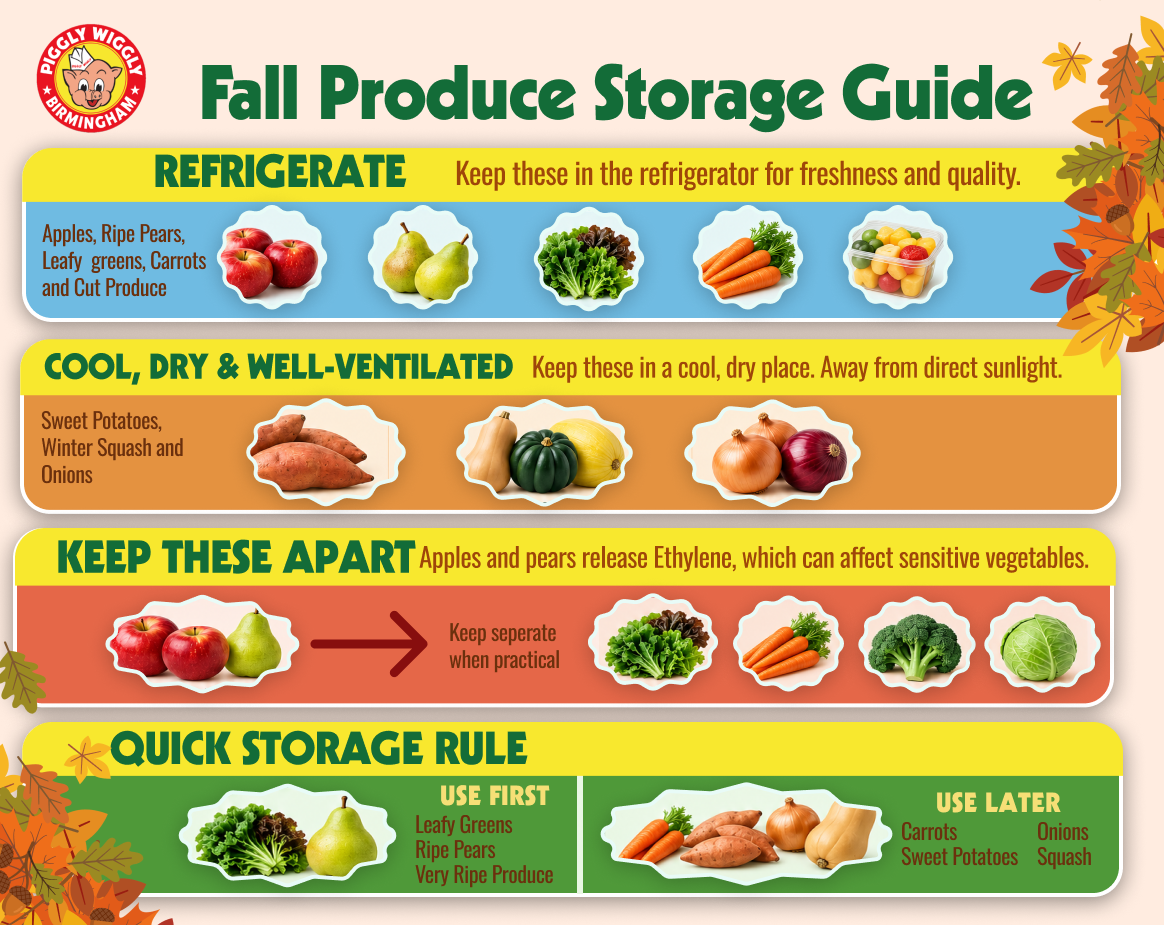
Apples, ripe pears, leafy greens, and carrots generally benefit from refrigeration, while raw sweet potatoes, mature onions, and whole winter squash are better suited to cool, dry, well-ventilated storage.
For Birmingham families bringing home fresh produce this fall, knowing what goes where can make it easier to plan meals and use what you buy.
Fall Produce Storage at a Glance
The easiest place to start is by sorting produce into the right storage zone.
Generally, apples, ripe pears, leafy greens, carrots, and pre-cut produce belong in the refrigerator. Raw sweet potatoes, mature dry onions, and whole winter squash generally do better in a cool, dry, well-ventilated area.
Ripeness and preparation matter, too. Firm pears can ripen at room temperature before being refrigerated, while vegetables such as winter squash and onions need refrigeration after they have been cut.
If you are also adjusting your grocery list as summer winds down, explore these early-fall produce and grocery swaps.
How to Store Apples and Pears
Apples and pears are natural fall staples, but they have slightly different storage needs.
Do Apples Need to Be Refrigerated?
For longer storage, keep apples in the refrigerator. A crisper drawer or another cold refrigerator area can help maintain their quality longer than extended room-temperature storage.
Check apples periodically and remove fruit showing significant bruising, soft spots, or deterioration.
Apples also naturally release ethylene gas as they ripen. Because some vegetables are sensitive to ethylene, keep apples away from leafy greens and carrots when practical.
If you have apples you want to use sooner, they can also add fresh flavor and crunch to fall charcuterie board ideas.
How Should You Store Pears?
Firm pears can ripen at room temperature. Once ripe, refrigerate them to slow further ripening.
Check them regularly as they ripen so they can be worked into meals and snacks while their quality is still good.
Pears also release ethylene, so ripe pears are best kept away from ethylene-sensitive vegetables when practical.
How to Store Sweet Potatoes
Raw sweet potatoes generally should not be refrigerated. Instead, choose a storage area that is:
- Cool
- Dark
- Dry
- Well ventilated
Avoid excess moisture and use a basket, open container, or another setup that allows air to circulate.
Check sweet potatoes when putting groceries away. Produce with significant damage or deterioration should be separated from sound items.
These recommendations are intended to help maintain quality rather than guarantee a specific shelf life. How well sweet potatoes keep can depend on their condition, handling, and storage environment.
How to Store Winter Squash
Winter squash varieties such as butternut, acorn, and spaghetti squash are another fall staple that generally belongs outside the refrigerator while whole.
Whole Winter Squash
Store whole winter squash in a cool, dry, well-ventilated location.
Keep it away from excess moisture and periodically check for soft spots, mold, or significant deterioration.
Cut Winter Squash
Once squash has been cut, the storage recommendation changes. Cover or wrap cut winter squash appropriately and refrigerate it.
This whole-versus-cut distinction is important for many types of produce and is one reason a single storage rule does not work for everything.
Winter squash, carrots, greens, and other seasonal vegetables can also become the starting point for easy fall soups with seasonal vegetables.
How to Keep Leafy Greens Fresh
Leafy greens are among the more perishable items in a produce haul, so refrigerate them promptly.
To help maintain their quality:
- Keep greens refrigerated.
- Avoid excess moisture and visible standing water.
- Use the original container or an appropriate produce bag or container.
- Keep pre-cut greens refrigerated.
- Check regularly for wilting, slime, or decay.
Avoid automatically washing every type of produce before putting it away. Excess moisture can contribute to deterioration in some foods.
For general handling, wash fresh produce thoroughly under running water before preparation rather than using soap or detergent.
Because leafy greens are relatively perishable, consider using them earlier in your meal plan. They can work in salads, sides, sandwiches, and weeknight fall soup ideas.
How to Store Carrots and Onions
These two everyday vegetables have very different storage needs.
Carrots Belong in the Refrigerator
Store carrots in the refrigerator, ideally in the vegetable crisper.
Carrots can be sensitive to ethylene, so keep them separated from apples and ripe pears when practical. Check stored carrots periodically and remove any showing significant deterioration.
Whole Dry Onions Need Airflow
Mature dry onions generally belong in a dry, well-ventilated area outside the refrigerator while whole.
A breathable basket, mesh bag, or another storage setup that allows airflow can work well. Avoid damp environments and excess moisture.
Once an onion has been cut, refrigerate the remaining portion appropriately in a covered container.
If you are reorganizing kitchen storage for the season, this is also a natural time to organize your fall pantry.
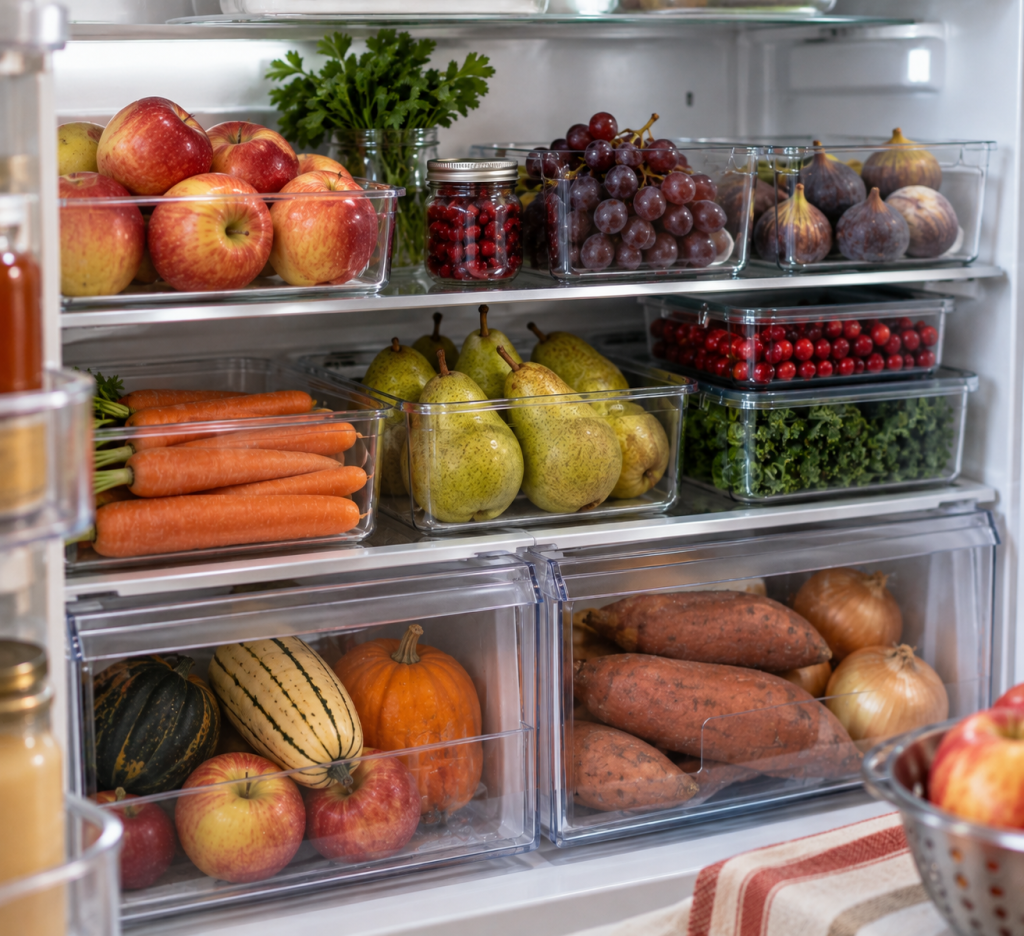
Keep fall produce fresh longer by storing apples, ripe pears, leafy greens, and carrots in the refrigerator while keeping whole winter squash, sweet potatoes, and dry onions in a cool, dry, well-ventilated place.
Why Should Apples and Pears Be Kept Away From Some Vegetables?
You may have noticed that the infographic recommends keeping apples and pears away from certain vegetables. The reason is ethylene.
Ethylene is a gas that some fruits naturally release as they ripen. Apples and pears are important examples. Although ethylene is a normal part of ripening, it can accelerate deterioration or cause unwanted changes in sensitive produce.
Leafy greens, carrots, broccoli, cabbage, and similar vegetables can be sensitive to ethylene.
The practical takeaway is simple: when possible, keep ripening apples and pears in a different refrigerator drawer or storage area from sensitive vegetables.
You do not need a complicated refrigerator organization system. A little separation can help different types of produce receive storage conditions better suited to them.
Fall Produce Storage Chart
For another quick reference, use this chart when putting groceries away.
| Produce | Best Storage Location | Key Tip |
| Apples | Refrigerator | Refrigerate for longer storage; separate from ethylene-sensitive vegetables when practical |
| Pears | Counter until ripe, then refrigerator | Refrigerate once ripe |
| Sweet potatoes | Cool, dark, dry area | Keep well ventilated; avoid refrigerating raw |
| Winter squash | Cool, dry area when whole | Cover and refrigerate after cutting |
| Leafy greens | Refrigerator | Manage excess moisture and use relatively early |
| Carrots | Refrigerator | Store in crisper and separate from apples and pears when practical |
| Onions | Cool, dry, ventilated area | Allow airflow; refrigerate after cutting |
Signs It’s Time to Toss Produce
Storage recommendations can help maintain quality, but a specific number of days does not guarantee whether produce is still good or safe to eat.
Instead of relying only on the calendar, pay attention to the condition of the food.
Common signs of significant spoilage include:
- Obvious mold
- Extensive decay
- Unpleasant or unusual odors
- Slimy textures
- Leaking or breaking-down tissue
- Severe softening or deterioration
If produce appears significantly spoiled, do not taste it simply to determine whether it is still good.
It is also important to distinguish freshness from food safety. A vegetable may lose some crispness or quality before it is necessarily spoiled, while badly deteriorated produce should not be judged by storage time alone.
Keep refrigerators at 40°F or below, and keep produce purchased pre-cut refrigerated. Fresh produce should also be kept separate from raw meat, poultry, and seafood during storage and preparation.
Use More Perishable Produce First
Proper storage is only part of making fresh groceries last. Meal planning can help, too.
When you unpack groceries, look at what you already have and decide which ingredients should be used first.
Use sooner:
- Leafy greens
- Ripe pears
- Very ripe produce
- Produce with minor bruising that is otherwise usable
Plan for later:
- Carrots
- Sweet potatoes
- Mature onions
- Whole winter squash
This does not mean the sturdier vegetables will remain fresh for a guaranteed amount of time. It is simply a practical way to prioritize more perishable ingredients before foods that generally store better under appropriate conditions.
For Birmingham households planning fall meals, this approach can also make it easier to build dinners around groceries already in the kitchen rather than buying replacements too soon.
Need ideas for putting seasonal vegetables to work? Explore these easy ways to use fall vegetables or seasonal grocery swaps for fall.
Frequently Asked Questions
Do apples need to be refrigerated?
Apples can be kept at room temperature for shorter-term use, but refrigeration is preferable for maintaining their quality longer. Because apples release ethylene, keep them separated from sensitive vegetables such as leafy greens and carrots when practical.
Should sweet potatoes be refrigerated?
Raw sweet potatoes generally keep better in a cool, dark, dry, well-ventilated area rather than the refrigerator. Overly cold storage can negatively affect their quality.
How do you store cut butternut squash?
Cover or wrap cut butternut squash appropriately and refrigerate it. Whole and cut winter squash have different storage requirements.
Which produce should be kept away from apples?
Apples release ethylene as they ripen. Ethylene-sensitive vegetables such as leafy greens, carrots, broccoli, and cabbage should be stored separately when practical.
Should you wash produce before storing it?
There is no blanket rule that works for every type of produce. Excess moisture can encourage deterioration in some items. Wash fresh produce thoroughly under running water before preparation, and do not use soap or detergent.
Keep Fall Produce Fresh and Put It to Good Use
Keeping produce fresh starts with giving each fruit and vegetable the storage conditions it needs. Use the Fall Produce Storage Guide after your next grocery trip, prioritize more perishable foods in upcoming meals, and check what is already in your refrigerator or pantry before restocking.
For seasonal grocery inspiration, review the Piggly Wiggly Birmingham weekly ad then visit your neighborhood Piggly Wiggly when you are ready to stock up on fresh produce and ingredients for upcoming meals.