


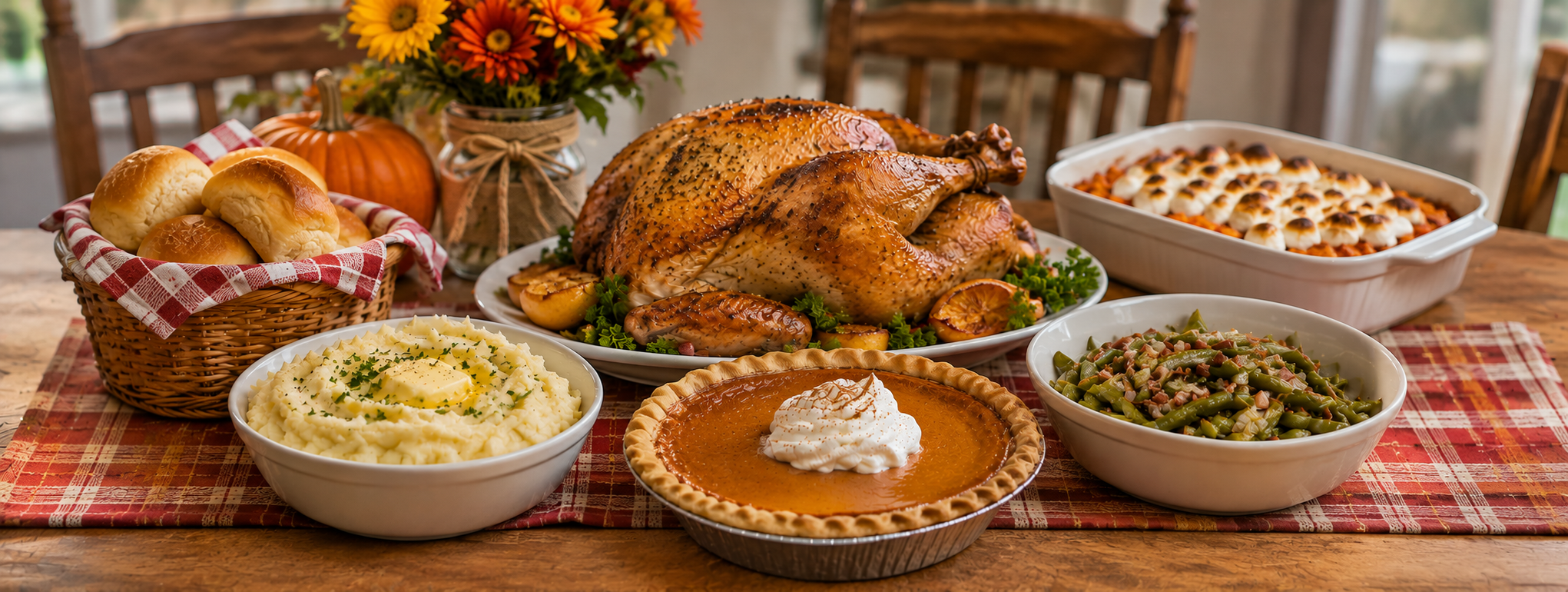
A Thanksgiving meal starts with a plan, not a full shopping cart. Decide how many people you’re feeding, choose the dishes that matter most to your guests, and set a grocery limit before you shop.
A simple menu, ingredients you already have and a thoughtful shopping list can help you plan a meal that fits your household. Here’s where to start before your next trip to Piggly Wiggly Birmingham.
A budget starts with your guest list
Confirm who’s coming before choosing your menu. Ask about dietary needs and whether anyone plans to bring a dish. Decide whether your budget covers food alone or also includes drinks, foil, storage containers and other extras.
Once you know your guest count, write down the amount you’re comfortable spending. Take stock of pantry ingredients and dishes others are bringing, then leave some room in your budget for anything you may have overlooked.
Keep a running estimate as you build the list. If it exceeds your limit, simplify the menu before adding everything to your cart.
Build your menu around family favorites
Start with one main dish, three sides, bread and one dessert. This is a planning option, not a rule: adjust it to your guest count, traditions and dietary needs.
For a gathering of six, your menu might be:
- Turkey or another main dish your household enjoys.
- Cornbread dressing.
- Mashed potatoes.
- Seasoned green beans.
- Dinner rolls.
- One pumpkin, pecan or sweet potato pie.
Choose recipes that state how many servings they make. Add another dish only when it fills a real need. If a guest is bringing dessert, cross dessert ingredients off your own list.
Choose a main dish that fits your gathering
Consider a whole turkey, turkey breast, chicken or ham according to what your guests will eat. Compare the total package price, the servings you need and the leftovers you actually want.
A lower price per pound doesn’t necessarily mean a smaller bill if you buy a much larger package. Bone-in and boneless cuts also aren’t equivalent purchases. Choose the cut and amount that fit your meal, rather than assuming one option is always cheapest.
Make the most of ingredients you already have
Read your recipes together before shopping. Onions and broth may be needed for both dressing and gravy; butter may appear in potatoes, rolls and dessert. Combine the amounts on one list so you don’t buy separately for each dish.
Check your pantry and refrigerator for ingredients you can use. Keep toppings and garnishes simple, especially when a recipe calls for something you won’t use again.
Bring your menu together in one grocery list
Use these categories as a starting point. Buy only the ingredients your chosen recipes need.
- Main dish: your chosen turkey, chicken, ham or other centerpiece.
- Produce: potatoes, onions, celery and other recipe ingredients.
- Vegetables: the fresh, frozen or canned option that fits your dish and budget.
- Pantry: broth, cornmeal, flour and seasonings you don’t already have.
- Dairy and eggs: the amounts required by your recipes.
- Bread and dessert: rolls and one dessert, or the ingredients to make them.
- Extras: drinks, gravy, cranberry sauce and supplies you’ve chosen to include.
Find offers for your neighborhood store
Select your MyPig store before checking the weekly ad. Piggly Wiggly Birmingham has three ad groups—BHM, OTM and Cost Plus—so use the ad for the store where you’ll shop.
Check each offer’s dates, package size, quantity requirements and any coupon conditions. Compare unit prices when the products and units are comparable. Don’t add an advertised item simply because it’s on offer if it isn’t part of your meal plan.
Before you head to The Pig
- Confirm the guest count and dishes others are bringing.
- Check ingredients at home and cross them off your list.
- Review the right store’s ad and offer dates.
- Total your estimated purchases against your spending limit.
- Leave optional extras behind if they push the meal over budget.
Keep the focus on the food your household enjoys and the time you’ll share. A clear list helps you decide what belongs on your Thanksgiving table—and what can stay off the grocery bill.