


Late summer in Alabama brings a useful overlap of fruits and vegetables that can work across breakfasts, lunches, snacks, and school-night dinners. For Birmingham families planning meals in August, choosing produce with more than one use can help turn seasonal inspiration into a practical grocery list.
There is an important distinction, though: being in season in Alabama does not mean a particular item at a grocery store was grown in Alabama. Seasonal calendars describe when crops are typically harvested or available within the state. The origin of produce sold at a particular Piggly Wiggly Birmingham location can vary by supplier, shipment, weather, and store availability.
Seasonal Alabama Fruits That Can Work Across Several Meals
Instead of buying a different fruit for every part of the day, choose a few that can move easily from breakfast to snacks or dinner sides.
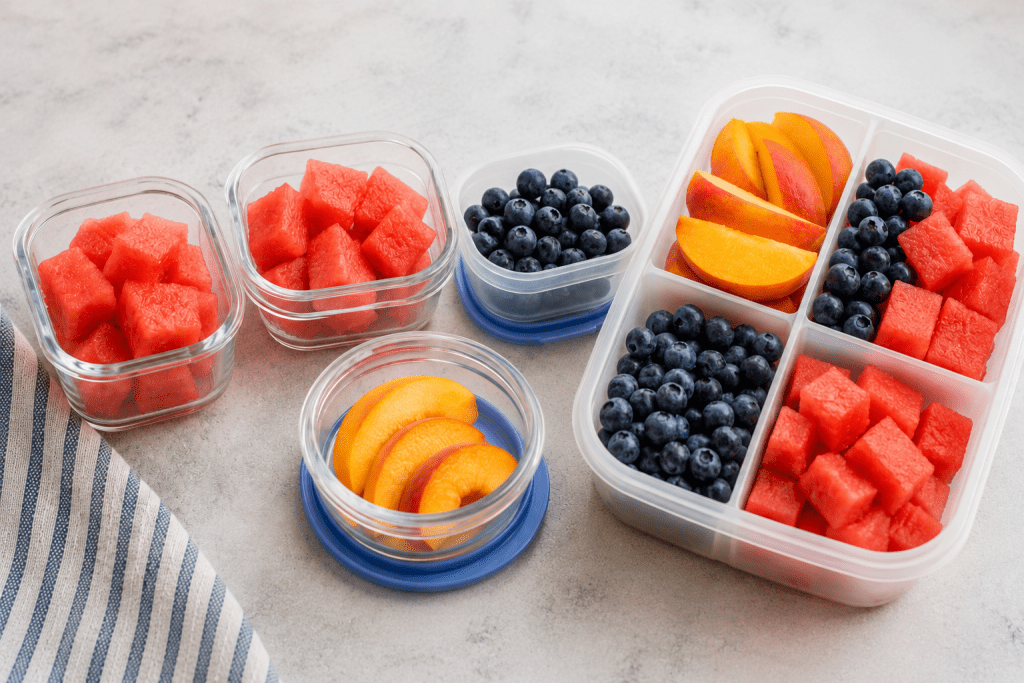
Peaches
Peaches are a classic late-summer choice in Alabama, with some varieties continuing into the final weeks of summer.
Try peaches in:
- Oatmeal or yogurt at breakfast
- A simple fruit side with lunch
- An after-school snack
- A dinner salad
- A quick dessert with yogurt or a sprinkle of cinnamon
A peach being sold in August should not automatically be described as Alabama-grown. Check package labeling, produce signage, or ask the store if local origin matters to your purchase.
Rabbiteye Blueberries
Rabbiteye blueberries can remain relevant during the late-summer season in Alabama, making them a useful choice for families looking for fruit with several easy uses.
Use blueberries in:
- Cereal, oatmeal, or yogurt
- Pancakes or muffins
- A simple fruit snack
- Smoothies
- Fruit salads
Because blueberries require almost no cutting, they can be especially useful when you want one fruit to cover several meals without much preparation.
Muscadines and Grapes: Late-Summer Snacking and Sides
Late summer is also a natural time to look for grapes and muscadines in Alabama.
Depending on what is available when you shop, they can work as:
- A breakfast fruit
- A snack
- A fruit side with sandwiches or wraps
- Part of a fruit-and-cheese plate
- An addition to chicken salad or another simple meal
Seasonal relevance and Alabama origin are separate questions. Grapes or muscadines sold in Birmingham during the season may still have been grown elsewhere.
Watermelon and Other Melons
Watermelon and other melons are especially well suited to hot Alabama days and can remain useful throughout late summer.
Melons can stretch across the day as:
- Breakfast fruit
- A cold afternoon snack
- A side with sandwiches
- A simple accompaniment to grilled or baked dinners
Before cutting a melon, wash the rind under running water. Firm-rinded melons can also be scrubbed with a clean produce brush before cutting.
Seasonal Vegetables That Earn More Than One Place on the Menu
Late-summer vegetables become especially practical when you choose them based on meals you already plan to make.
Bell Peppers
Bell peppers are a flexible late-summer vegetable with uses that extend well beyond one recipe.
Try them in:
- Scrambled eggs or omelets
- Wraps or sandwiches
- Tacos or quesadillas
- Pasta
- Sheet-pan dinners
One package or group of peppers can support several different meals instead of being tied to a single dish.
Tomatoes and Grape Tomatoes
Tomatoes are another useful late-summer pick for Alabama meal planning.
They can move between meals easily:
- Add slices to eggs or breakfast toast.
- Use them on sandwiches and wraps.
- Chop them into salads.
- Add them to pasta.
- Spoon chopped tomatoes over rice bowls or tacos.
If Alabama-grown tomatoes are important to you, look for origin information rather than assuming that seasonal tomatoes at a particular store were grown in-state.
Cucumbers
Cucumbers are especially useful when you want one vegetable that can work in both cold meals and simple sides.
Use cucumbers in:
- Sandwiches and wraps
- Chopped salads
- Grain bowls
- A quick cucumber-and-tomato side
- Snacks with a favorite dip
Pairing cucumbers and tomatoes is one easy way to give two seasonal vegetables a shared purpose across the week.
Summer Squash and Zucchini
Summer squash and zucchini are versatile choices during the late-summer season.
They can work in:
- Egg dishes
- Pasta
- Sheet-pan dinners
- Sautéed vegetable sides
- Rice bowls
- Casseroles
If you are already planning pasta or a roasted dinner, squash can often be added without creating an entirely separate meal plan.
Sweet Corn
Sweet corn is another useful late-summer vegetable that can stretch across several meals.
Cooked corn can become:
- A simple dinner side
- An addition to rice bowls
- Part of a pasta salad
- A topping for tacos
- An ingredient in a chilled grain salad
If you cook more than you need for one dinner, the kernels can be cut from the cob and incorporated into another meal, provided leftovers are cooled and stored safely.
For more ways to turn vegetables and other groceries into practical family meals, explore easy school-night dinner ideas.
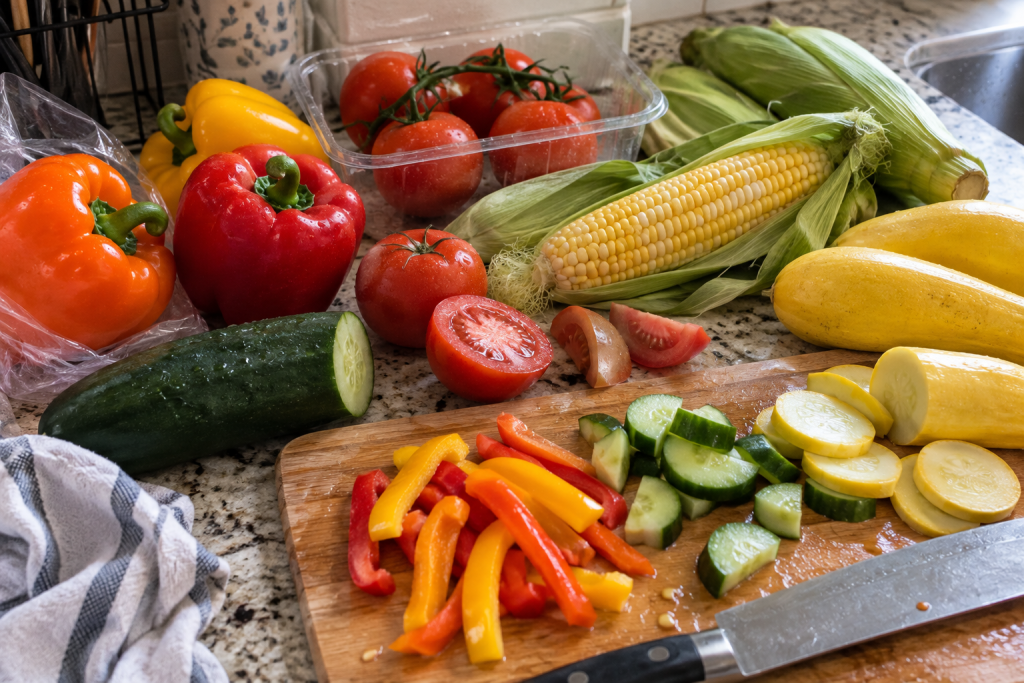
Stock up on versatile fresh vegetables such as bell peppers, tomatoes, cucumbers, summer squash, zucchini, and sweet corn for easy lunchboxes, snacks, and school-night dinners.
Build the Week Around Produce That Has More Than One Job
The easiest way to use seasonal produce is not to force every fruit or vegetable into every meal. Instead, pick a small group that fits foods your household already likes.
For example:
- Peaches: yogurt at breakfast → snack → dinner salad or simple dessert
- Blueberries: oatmeal → snack → smoothie
- Melon: breakfast fruit → snack → dinner side
- Bell peppers: eggs → wraps → tacos or sheet-pan dinner
- Tomatoes: breakfast toast → sandwiches → pasta or rice bowls
- Cucumbers: wraps → salad → dinner side
- Summer squash: eggs → pasta → roasted side
- Sweet corn: dinner side → rice bowl → pasta or grain salad
That approach keeps the focus on seasonal produce while also making your grocery list easier to use.
For a full dinner plan built around ingredients that repeat across the week, see One Grocery Trip, Five Easy School-Night Dinners.
Keep Seasonal Produce Fresh Once You Get It Home
Storage can determine whether a good produce plan lasts through the week.
Different fruits and vegetables need different storage conditions, so avoid treating everything in the produce department the same way. Some items do best refrigerated right away, while others may benefit from ripening at room temperature first.
Perishable and pre-cut produce should be kept refrigerated, and fresh produce should generally be washed under running water before preparing or eating it. Do not use soap or detergent on fruits and vegetables.
For produce-by-produce storage ideas and ways to reduce waste during a busy week, continue with How to Keep Fresh Produce Fresh Longer During the School Week.
Plan Your Next Produce Trip
Alabama’s late-summer season can provide plenty of inspiration for breakfasts, snacks, sides, and family dinners, but your shopping list should still start with what your household will actually use.
Choose a few fruits and vegetables with two or three planned meals in mind. Then check the current Piggly Wiggly Birmingham weekly ad for advertised produce and other grocery offers.
Because inventory and origin can vary by store, you can also use the Piggly Wiggly Birmingham store locator to find a nearby location before you shop. Contact the store directly if you need to confirm whether a specific item or Alabama-grown version is currently available.
FAQ
What produce is in season in Alabama in August?
Late-summer Alabama produce can include fruits such as peaches, blueberries, grapes, muscadines, and melons, along with vegetables such as bell peppers, cucumbers, summer squash, sweet corn, and tomatoes. Actual timing varies by crop, region, weather, and growing conditions.
Does “in season in Alabama” mean the produce at the store was grown in Alabama?
No. Seasonality describes when a crop is commonly harvested or available within Alabama. It does not establish where a particular item on a grocery shelf was grown. Check package labels, signs, or store information when you want to confirm origin.
Is the same seasonal produce available at every Piggly Wiggly Birmingham location?
Not necessarily. Produce selection, sourcing, and inventory can vary by location and shipment. Check the weekly ad for current advertised offers and contact your chosen store if you need to confirm a particular item.
How can I make seasonal produce easier to use during the week?
Choose produce based on several planned uses rather than a single recipe. Bell peppers can move from eggs to wraps to dinner, while peaches or blueberries can work at breakfast and again as snacks. The goal is to give a few seasonal ingredients multiple jobs.
Where can I find more detailed produce-storage guidance?
See How to Keep Fresh Produce Fresh Longer During the School Week for more detailed storage planning.
Make Alabama Seasonality Part of the Grocery Plan
Late-summer Alabama produce gives Birmingham families plenty of ways to add fresh ingredients to everyday meals without creating a complicated menu.
Start with the seasonal calendar in mind, choose fruits and vegetables that fit more than one meal, and then check what is actually available when you shop. Seasonality can point you in the right direction, while labeling and store information can tell you whether a particular item is Alabama-grown.
When you are ready to plan your trip, review the Piggly Wiggly Birmingham weekly ad and find a convenient location with the Piggly Wiggly Birmingham store locator.