


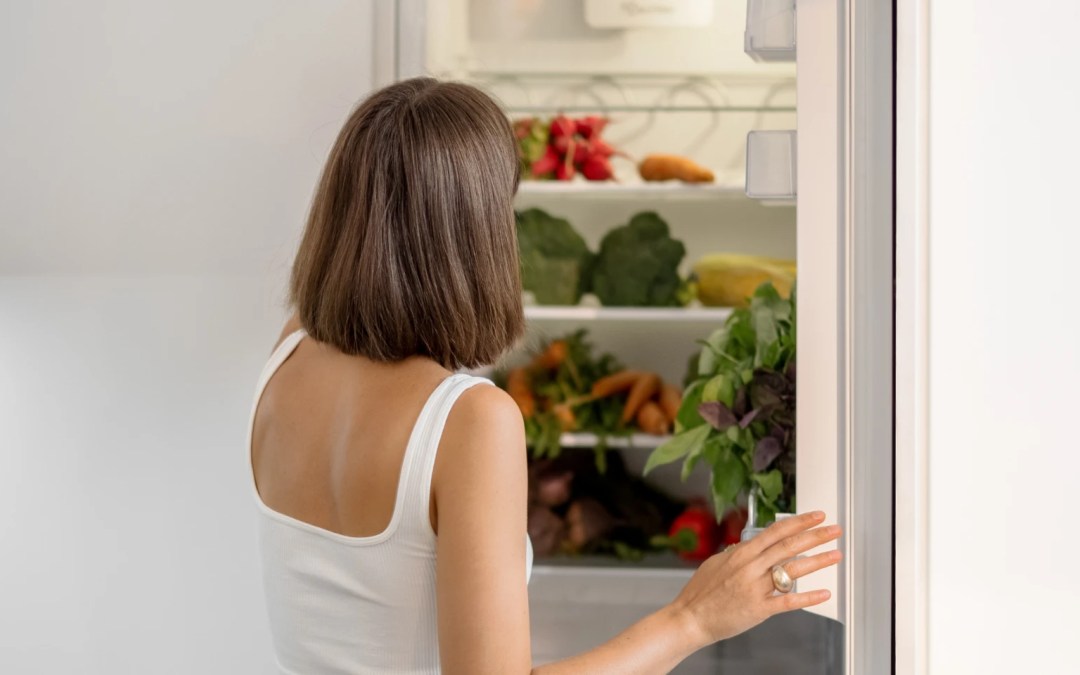
For Birmingham families, a fresh-produce grocery trip is often about more than what sounds good today. Those fruits and vegetables may need to work across several days of breakfasts, packed lunches, after-school snacks, and family dinners.
Knowing how to keep produce fresh longer can help you make better use of what you bring home from Piggly Wiggly Birmingham. The key is a simple routine: wash correctly, store appropriately, prep strategically, and use produce before it spoils.
There is no single storage method for every fruit and vegetable. Berries have different needs than apples, leafy greens need different handling than tomatoes, and everything changes once produce is cut. Here is a practical guide Birmingham families can use throughout the school week.
Should You Wash Produce Before Storing It?
Washing produce before eating it and washing produce before storing it are two different things.
Fresh fruits and vegetables should be rinsed thoroughly under running water before preparing or eating them. Firm produce, such as cucumbers and melons, can be scrubbed with a clean produce brush. Soap, detergent, bleach, and commercial produce wash should not be used.
For storage, however, many fruits and vegetables can remain unwashed until you are ready to use them. Delicate berries are a good example because added moisture can encourage deterioration.
If washing produce ahead makes school-week preparation easier for your family, dry it thoroughly before putting it in the refrigerator. Produce labeled pre-washed or ready-to-eat does not need to be washed again.
Wash Before Eating or Preparing
Berries, grapes, apples, cucumbers, peppers, carrots, and other fresh produce should be rinsed under running water before eating or preparing. When drying is appropriate, use a clean cloth towel or paper towel.
For Storage, Moisture Matters
Putting wet produce directly into storage can work against your goal of keeping it usable. If you wash fruits or vegetables ahead, remove excess moisture before refrigerating them. For delicate berries, it is often better to wait and rinse only the amount your family is ready to use.
A refrigerator that is easy to check and organize also makes produce management simpler during a busy week. For broader kitchen preparation, use the Back-to-School kitchen reset checklist.
Quick Produce Storage Guide
A few simple habits can make fresh produce easier to manage throughout a busy school week:
- Store produce in the right place. Some fruits and vegetables need refrigeration, while others can stay at room temperature until ripe or ready to use.
- Control excess moisture. If you wash produce ahead of time, dry it thoroughly when appropriate before storing.
- Keep produce whole when practical. Prepare only what your family expects to use, and refrigerate cut produce promptly in a clean, covered container.
- Organize by what needs to be used first. Keep ripe or softening produce visible so it is less likely to be forgotten.
- Check produce during the week. A quick refrigerator and countertop check can help you decide what to use in upcoming meals and snacks.
For Birmingham families shopping at Piggly Wiggly, these simple steps can help make fresh produce easier to store, organize, and use throughout the school week.
For ideas on putting your fruit and vegetables to work during busy weekdays, see fresh produce picks for Back-to-School meals.
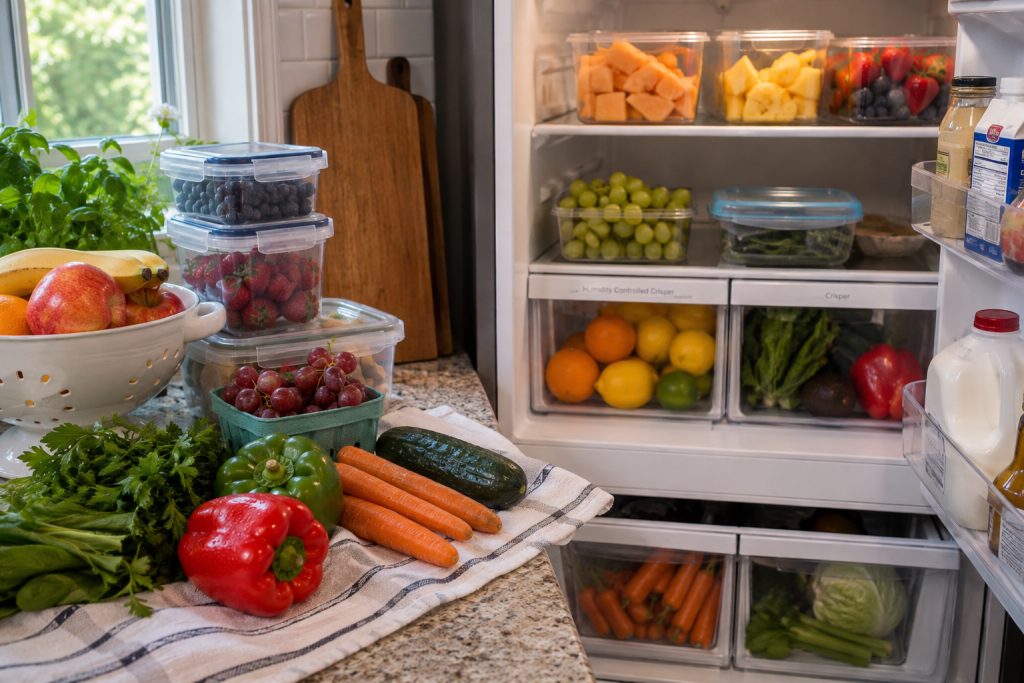
How to Store Fresh Vegetables
A few simple storage habits can help keep fresh vegetables ready for school-week meals and snacks:
- Refrigerate when appropriate. Many vegetables do best in the refrigerator, often in a produce or crisper area.
- Control excess moisture. If you wash vegetables ahead of time, dry them thoroughly when appropriate before storing.
- Prep only what you need. Keep vegetables whole until needed, and refrigerate cut or prepared vegetables promptly in a clean, covered container.
- Keep produce separate from raw foods. Prevent raw meat, poultry, seafood, and their juices from contacting vegetables that may be eaten raw.
- Check produce during the week. Move vegetables beginning to soften or wilt somewhere visible so you remember to use them first.
For Birmingham families shopping at Piggly Wiggly, these simple habits can make fresh vegetables easier to use throughout a busy school week.
Keep Prepped Produce Fresh for Easy School-Week Use
A little preparation can make produce easier to reach for on busy Birmingham school mornings and afternoons. The goal, however, is not to cut everything as soon as you get home from the grocery store.
Carrot sticks, pepper strips, and thoroughly washed and dried greens can be prepared ahead and refrigerated appropriately. Delicate berries and produce that loses quality quickly after cutting may be better prepared closer to when your family plans to eat it.
Cut Only What You Are Likely to Use
Match produce prep to what your household realistically expects to use. Preparing smaller amounts can give you ready-to-use ingredients without unnecessarily cutting the rest of your produce early.
Keep Cut Produce Covered and Cold
Cut, peeled, or cooked produce should be refrigerated promptly. A useful food-safety rule is to refrigerate it within two hours, or within one hour when it has been exposed to temperatures above 90°F.
Store cut produce in a clean, covered container in the refrigerator. Produce prepared for a packed meal remains perishable and should also be kept appropriately cold until it is time to eat.
For more ways to turn those ingredients into school-day options, explore fresh produce for school lunches and snacks.
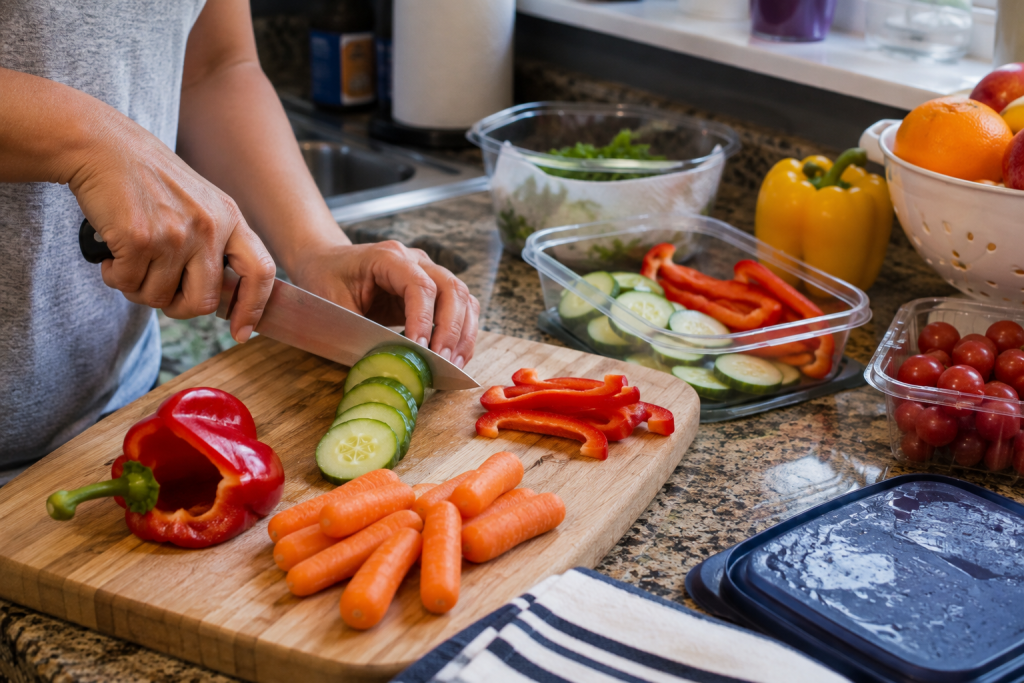
Save time during busy school weeks by prepping practical amounts of fresh vegetables like cucumbers, carrots, and peppers, then keeping them covered and cold until ready to use.
Keep Raw Foods Separate From Ready-to-Eat Produce
Keep produce that will be eaten raw separate from raw meat, poultry, seafood, and their juices. Cutting boards, utensils, dishes, countertops, and other preparation surfaces should also be cleaned appropriately between raw animal foods and ready-to-eat produce.
When produce seems to decline too quickly during the school week, a few everyday storage habits may be contributing. Watch for these common mistakes:

For food safety, keep your refrigerator at 40°F or below. An appliance thermometer can help you check the temperature.
Use Fresh Produce Before It Goes to Waste
Good storage helps, but visibility matters too. A cucumber hidden behind other groceries or berries forgotten at the back of the refrigerator cannot make it into Wednesday’s snack or Thursday’s dinner.
A quick produce check during the week can help Birmingham families make better use of groceries already at home before deciding what belongs on the next Piggly Wiggly shopping list.
Create a Simple Use-First Spot
Move ripe, softening, or already-prepped produce somewhere easy to see. You do not need a special container or refrigerator system.
A use-first spot does not make produce last longer. It simply makes ingredients that should be prioritized easier to remember.
Check Produce Once During the Week
Use this quick routine:
- Look through refrigerator drawers and countertop produce.
- Identify fruits and vegetables that should be used sooner.
- Remove spoiled pieces where appropriate.
- Move use-first produce somewhere visible.
- Choose upcoming breakfasts, lunches, snacks, or dinners that can use those ingredients.
- Note what does and does not need replacing on your next grocery trip.
If you have fruit or vegetables ready to be used, easy after-school snack ideas can help you find a practical place for them in the week’s routine.
Frequently Asked Questions
Should you wash fruits and vegetables before putting them in the refrigerator?
There is no universal yes-or-no rule. Produce should be washed under running water before preparing or eating it. Many items, especially delicate berries, can be better stored unwashed to avoid adding unnecessary moisture. If you wash produce ahead, dry it thoroughly before storage.
What temperature should the refrigerator be for fresh produce?
Keep your refrigerator at 40°F or below. An appliance thermometer can help verify the temperature. Avoid overcrowding the refrigerator so cold air has room to circulate.
How should cut fruit and vegetables be stored?
Place cut produce in a clean, covered container and refrigerate it promptly. Cut, peeled, or cooked produce should be refrigerated within two hours, or within one hour when exposed to temperatures above 90°F.
Which fruits and vegetables should not be stored together?
Some produce releases ethylene while other produce is sensitive to it. For a practical household example, keep apples away from sensitive vegetables such as lettuce and cucumbers where possible. Cucumbers can also be stored away from apples and tomatoes.
Should tomatoes be stored in the refrigerator?
Whole tomatoes are generally kept at room temperature away from direct sunlight for ripening and quality. Cut tomatoes should be refrigerated. Refrigeration can also become appropriate as tomatoes become fully ripe, so storage can depend on their stage of ripeness.
Make Fresh Produce Part of Your School-Week Routine
Keeping fruits and vegetables usable through a busy school week does not require elaborate storage tricks. Wash appropriately, control excess moisture, store different types of produce where they belong, refrigerate cut produce promptly, and check what should be used first.
When you’re building your next school-week grocery list, Piggly Wiggly Birmingham can be part of the routine from the start. Shop for the fruits, vegetables, and other groceries your household plans to use, then apply these storage habits once you get home so those ingredients are easier to put to work throughout the week.