


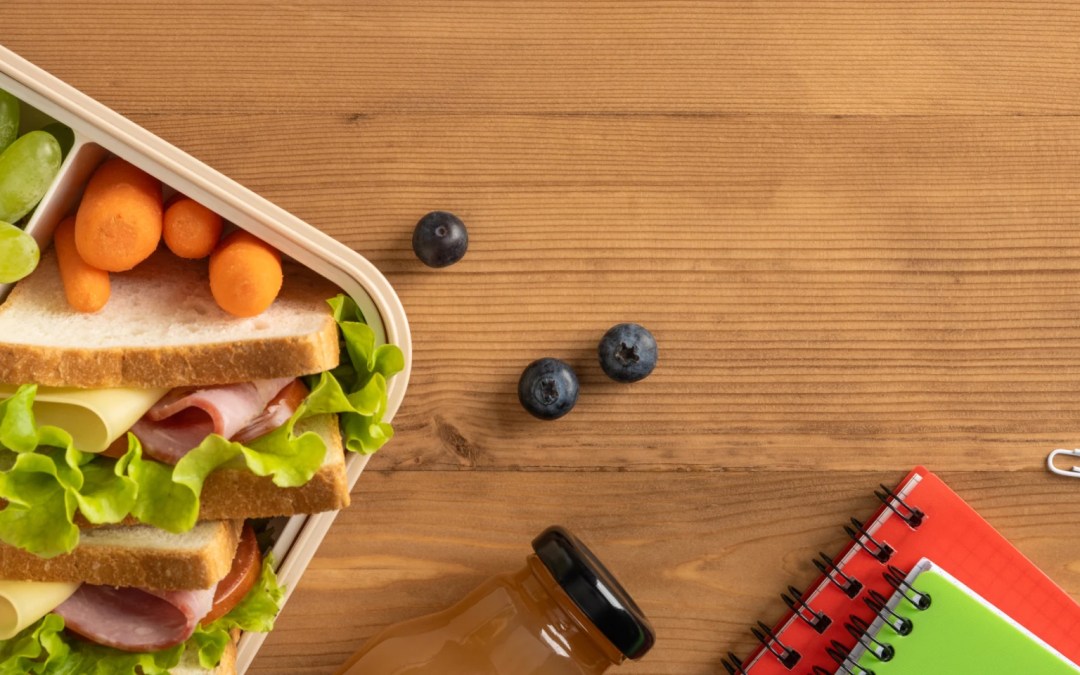
Busy school mornings call for lunch ideas that are simple to assemble and easy to vary throughout the week. For Birmingham parents and caregivers, that can mean relying on familiar ingredients such as fresh fruit and vegetables, deli meats, cheese, breads, wraps, crackers, hummus, and other pantry staples.
This guide focuses on practical lunch assembly rather than nutrition rules or complicated recipes. Start with a few mains, fresh fruits and vegetables, simple sides, and optional extras. Then change the format or swap one component to create variety without buying a completely different set of groceries for every school day.
For the nutrition framework behind building a balanced school lunch, see registered dietitian Sophie Dolan, MS, RDN, LD’s tips for packing school lunch
A Simple Way to Build an Easy School Lunch
For practical assembly, think about the lunchbox in four parts:
- Main: Sandwich, wrap, roll-ups, pita, pasta salad, or snack-box ingredients
- Fresh produce: Fruit, cucumber, bell pepper, carrots, berries, or another familiar option
- Side: Crackers, pita pieces, cheese, or another simple addition
- Optional extra: Hummus, dip, spread, or another small favorite
This is an idea-building tool, not a nutritional formula. Sophie Dolan’s lunch-packing guide provides the more detailed nutrition framework.
The advantage of this approach is that you don’t have to reinvent lunch every morning. Turkey and cheese, for example, can become a wrap one day and roll-ups another. Cucumber might accompany both lunches, while changing the fruit or side gives each lunch a little variety.
Before You Start: A Few Preparation Assumptions
The lunch ideas below assume that:
- Fresh produce has been rinsed under running water before preparation.
- Refrigerated ingredients have been properly stored and kept cold.
- Cooked chicken used in a lunch has already been safely cooked, cooled, and refrigerated.
- Ingredients are prepared in a form appropriate for the child’s age and development.
- School-specific food and allergy policies have been checked.
- Perishable lunches will be packed with appropriate cold sources.
For more help choosing, preparing, and packing fruits and vegetables, use our Fresh Produce Guide for School Lunches and Snacks.
Quick School Lunch Ideas for Busy Mornings
These combinations demonstrate different ways to use familiar lunchbox ingredients without requiring much morning preparation.
Turkey-and-Cheese Roll-Ups
Roll slices of turkey and cheese together and pack them with cucumber, grapes, and crackers.
For an easy variation, change the fruit or vegetable rather than rebuilding the entire lunch. Keep crackers separate from moist produce so they stay crisp.
Prepare grapes and other foods appropriately for your child’s age.
Ham-and-Cheese Sandwich
A ham-and-cheese sandwich provides a familiar starting point when there isn’t much time for assembly. Add apple slices and carrots, cucumber, or bell pepper.
Ham and cheese sandwich made with whole wheat bread on a plate for an easy school lunch
Keep school lunch simple with a classic ham-and-cheese sandwich that is quick to assemble and easy to pair with familiar fresh produce.
Hummus, Pita, and Fresh Produce
Pack hummus in a small leak-resistant container with pita pieces, cucumber or bell pepper, and fresh fruit. Crackers can replace the pita when you want a different format.
This no-cook option also provides a meaningful alternative to the deli-meat-and-cheese combinations.
Check your child’s school food and allergy policies before packing ingredients that may be restricted.
Chilled Pasta Salad
Prepare a simple pasta salad with cucumber and cheese and chill it thoroughly before packing. Add fresh fruit on the side.
Instead of preparing several different pasta salads, change the fruit, vegetable, or cheese when you want variety.
Try a Snack-Box Lunch
A snack box changes the format without requiring a completely different group of ingredients.
Pack deli meat and cheese with crackers, cucumber, and a favorite fresh fruit. Separate crackers from moist foods to help maintain their texture.
You can also build a meat-free version using hummus, pita or crackers, fresh vegetables, and fruit.

The benefit of this format is flexibility: ingredients that appeared in a sandwich or wrap earlier in the week can become individual snack-box components without making lunch feel identical.
Use Prepared Ingredients in a Different Format
When you have safely prepared ingredients available, changing the format can give them another useful role.
Chilled Chicken Pita
Use previously cooked, properly chilled chicken to fill a pita, then add fresh vegetables and fruit. A tortilla can replace the pita if that is what you already have.
Keep the chicken refrigerated until it is time to pack the lunch.
Turn a Small Ingredient Selection Into Five Different Lunches
You don’t need five completely different ingredient lists to create five school lunches. Here is one example of how overlapping ingredients can become a workable Monday-through-Friday rotation.
| Day | Main | Fresh Produce | Side / Extra |
|---|---|---|---|
| Monday | Turkey-and-cheese wrap | Cucumber + grapes | Crackers |
| Tuesday | Hummus and pita | Bell pepper + apple | Cheese |
| Wednesday | Turkey-and-cheese roll-ups | Cucumber + apple | Crackers + hummus |
| Thursday | Chilled pasta salad with cheese and cucumber | Grapes | Bell pepper |
| Friday | Turkey, cheese, and cracker snack box | Cucumber + grapes | Hummus |
This example intentionally repeats turkey, cheese, cucumber, fruit, crackers, hummus, and a few bread or grain options. The variation comes from changing the format and combinations rather than purchasing a separate collection of ingredients for every lunch.
It is only an example. Substitute foods according to your child’s preferences, dietary needs, age, school policies, and what your household already uses.
Make School Lunch Assembly Faster
A little preparation can make this rotation much easier to manage on school mornings.
- Portion suitable fruits and vegetables ahead when useful.
- Prepare appropriate refrigerated components the night before and keep them cold.
- Keep wet ingredients away from bread and crackers when texture matters.
- Pack hummus, dips, and sauces in leak-resistant containers.
- Change one component at a time when you want variety rather than changing the entire lunch.
- Use the same ingredient in different formats—for example, turkey in a wrap, roll-ups, or snack box.
- Check school-specific allergy and food policies before packing restricted ingredients.
When lunchbox staples start running low, use Lunchbox Staples Every Family Should Keep on Hand as a replenishment guide for the breads, proteins, refrigerated ingredients, sides, spreads, and other basics that support a lunch rotation like this one.
Keep Fresh Ingredients Practical for Lunchboxes
Fresh produce becomes easier to use when you select options that fit how your family actually packs lunches. Apples, berries, cucumber, bell pepper, carrots, and other familiar choices can move between different combinations throughout the week.
FDA guidance recommends rinsing produce under running water before preparing or eating it and does not recommend washing fruits and vegetables with soap or detergent.
For younger children, preparation matters too. Foods should be cut or otherwise prepared appropriately for the child’s age and development. Whole grapes, hard raw produce pieces, and other foods that may present choking hazards require particular attention.
Our Fresh Produce Guide for School Lunches and Snacks goes further into choosing and packing produce for school lunches, so this article can stay focused on assembling the lunches themselves.
Keep Perishable School Lunches Cold
Many of these combinations contain perishable foods, including deli meat, cheese, hummus, cut produce, prepared wraps, cooked chicken, and pasta salad.
Keep refrigerated ingredients at 40°F or below before packing. USDA Food Safety and Inspection Service guidance recommends using an insulated lunch bag with at least two cold sources for perishable lunches. Examples include two frozen gel packs or a frozen gel pack paired with a frozen water bottle or juice box.
An ordinary lunch container or compartment box by itself should not be treated as refrigeration.
Build a Rotation That Works for Your Family
The goal isn’t to find dozens of completely different school lunches. Start with a manageable group of ingredients your child will eat, then create variety through sandwiches, wraps, roll-ups, pitas, pasta, and snack-box formats.
Use Sophie Dolan’s school lunch guidance when you need the nutrition framework. Use Lunchbox Staples Every Family Should Keep on Hand when it’s time to replenish your core ingredients. And use the Fresh Produce Guide for School Lunches and Snacks for more detailed help choosing and packing fruits and vegetables.
Once you find several combinations your child enjoys, keep them in rotation and make small substitutions as needed. That gives you a practical starting point for five school days of lunches without having to start from scratch every morning.