


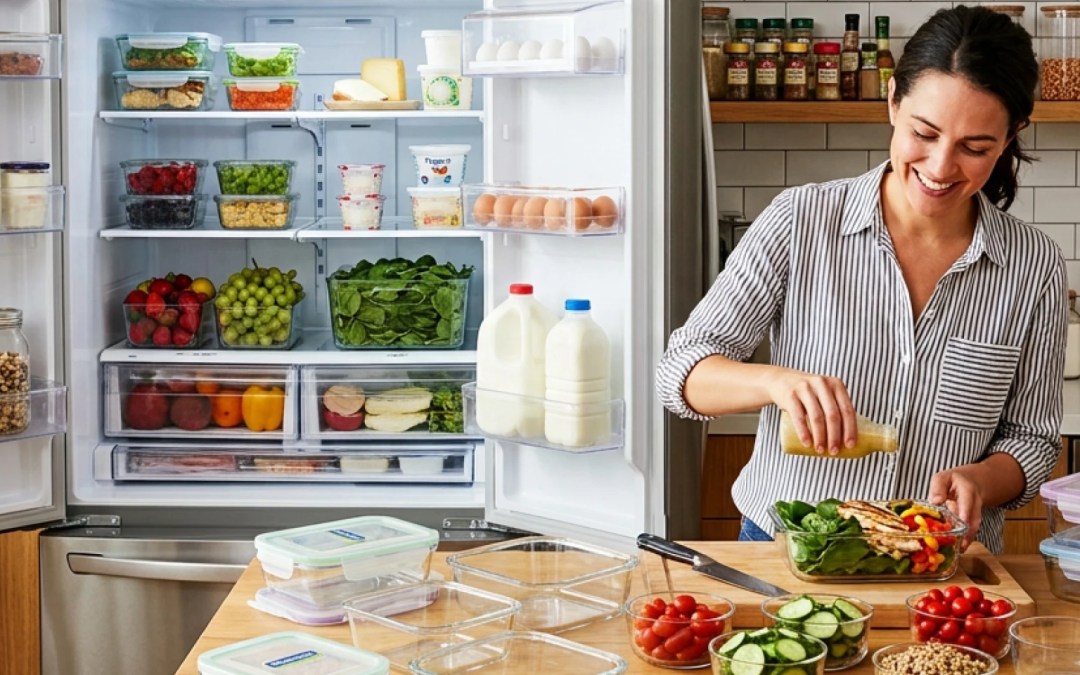
For Birmingham families, keeping school lunches stocked does not have to mean buying the same long list every week. A more practical approach is to check what you already have, identify what your household actually uses, and restock a small rotation of flexible ingredients.
Think of this as a weekly lunch-restocking guide rather than a list of foods every family needs. Your staples will depend on your child’s preferences, school policies, allergies, household size, available refrigeration, and the kinds of lunches you regularly pack.
The goal is simple: check what you have, note what you need, and buy quantities that fit your household.
Start With Your Lunch Rotation
Before making a grocery list, think about the basic lunch formats your household expects to use during the coming school week.
You might rotate among:
- Sandwiches
- Wraps
- Crackers with separately packed ingredients
- Leftovers
- Simple hot lunches
- Familiar fruits, vegetables, or snacks on the side
You do not need ingredients for every option. Pick the formats that fit your week, then restock the ingredients that support them.
For complete lunch combinations, see easy school lunch ideas.
Check the Pantry
Start with the pantry because many of these ingredients can support more than one lunch format.
Depending on what your family eats, look for:
- Bread
- Tortillas or wraps
- Crackers
- Jelly or jam
- Mustard and preferred condiments
- Nut or seed spreads where permitted
- Shelf-stable sides your family actually eats
As you look through the pantry, ask three simple questions: Do we have it? Do we need it this week? How much will our household realistically use?
Connect each purchase to the lunches you expect to pack rather than stocking it automatically.
Bread might cover sandwich days. Tortillas can handle wraps or rolled lunches. Crackers can work as a simple side or accompany separately packed cheese or another familiar food.
School allergy policies vary. Check your child’s school or classroom rules before packing foods containing nuts, seeds, or other restricted ingredients.
Check the Refrigerator
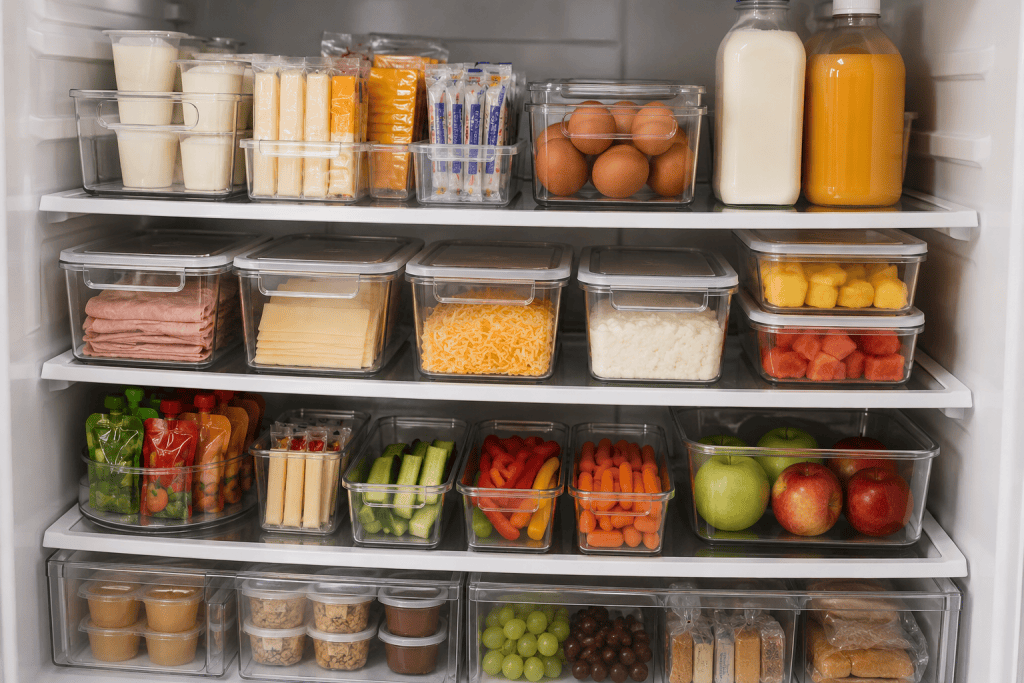
The refrigerator is where buying more than you need can lead to food waste, so focus on ingredients that already have a place in the week’s lunch rotation.
Depending on your household, look for:
- Sliced cooked turkey, chicken, ham, or another preferred ready-to-eat option
- Cheese slices, sticks, or cubes
- Yogurt
- Eggs
- Hummus or another refrigerated dip
- Fresh fruit
- Fresh vegetables
Deli meat can move between sandwiches, wraps, and separately packed lunch components. Cheese can do the same. Yogurt may work as a snack or side, while produce can fill whichever role makes sense for your child.
Opened packaged luncheon meat and deli-sliced luncheon meat can generally be refrigerated for 3–5 days at 40°F or below. If your household is unlikely to use an item within its safe storage window, consider buying a smaller amount instead of automatically purchasing the same quantity every week.
Choose Produce Your Household Will Use
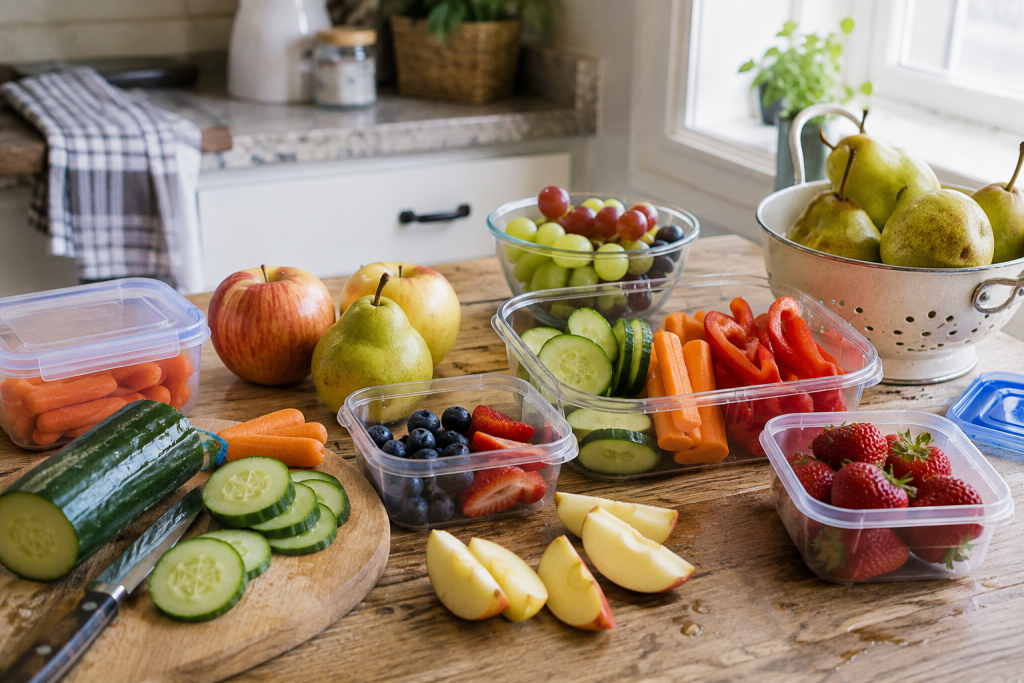
Instead of trying to keep every possible lunchbox fruit and vegetable on hand, choose a few your household regularly uses.
Possible choices include:
- Apples or pears
- Berries
- Cucumbers
- Bell peppers
- Carrots
- Appropriately prepared grapes
- Other familiar seasonal produce
Whole fruit can be convenient when appropriate, while vegetables may work in wraps, sandwiches, or separately packed portions.
For more ideas about choosing produce that can work across several meals, see Alabama seasonal produce for back-to-school meals.
Check the Freezer
The freezer can provide useful backup options when refrigerated lunch ingredients run low or when you want to save suitable leftovers for another school day.
Depending on your family’s routine, look for:
- Individually portioned cooked leftovers
- Bread or tortillas your household freezes successfully
- Frozen prepared foods your household already uses
- Another familiar freezer option suitable for a school lunch
There is no need to build a large collection of lunch-specific frozen foods. One or two dependable options may be enough.
Thaw frozen foods safely in the refrigerator, in cold water, or in the microwave rather than on the kitchen counter. Food thawed using cold water or a microwave should be cooked immediately.
Use Flexible Ingredients Across the Week
Make everyday groceries go further by choosing ingredients that can fill more than one role in the week’s lunch rotation.
Tortillas can become wraps or rolled lunches. Crackers can work as a side or alongside separately packed ingredients. Cheese can move between sandwiches, wraps, crackers, and snacks. Fresh produce can serve as a side, snack, or part of the main lunch.
Thinking about ingredients this way can help you restock without buying a completely different group of groceries for every school day.
Pack Cold Foods Cold
If a lunch contains perishable foods and will not be placed in a refrigerator at school, packing conditions matter.
Foods that may require cold holding include:
- Deli meat
- Cheese
- Yogurt
- Hard-boiled eggs
- Hummus
- Cut or prepared perishable produce
- Other foods labeled for refrigeration
Keep refrigerated ingredients at 40°F or below before packing. If you prepare lunch the night before, keep the perishable components refrigerated overnight and transfer them to the insulated lunch bag with cold sources in the morning.
Pack Hot Foods Hot
If your rotation includes a hot lunch, use a clean insulated food container designed to keep food hot.
USDA recommends filling the insulated container with boiling water, letting it stand for a few minutes, emptying it, and then adding food that has been heated to at least 165°F. Keep the container closed until lunchtime.
When reheating cooked leftovers before packing, heat them to 165°F.
Hot food and cold food require different packing strategies, so decide which type of lunch you are sending before the morning rush.
Make a Short Restock List
Once a week, take a quick look through the pantry, refrigerator, and freezer.
First, think about which basic lunch formats you expect to pack. You do not need a detailed menu for every day.
Next, look at the ingredients you already have. Check bread, wraps, crackers, refrigerated foods, produce, freezer backups, insulated lunch bags, and cold packs.
Then write down only what needs replacing and the amount your household is likely to use.
Finally, think about what came home uneaten during the previous week. If an ingredient repeatedly returned untouched, consider buying less, substituting something familiar, or leaving it off the restock list for now.
For more help building a manageable snack rotation around familiar foods and child feedback, see Lunchbox Snacks to Try With Your Kids.
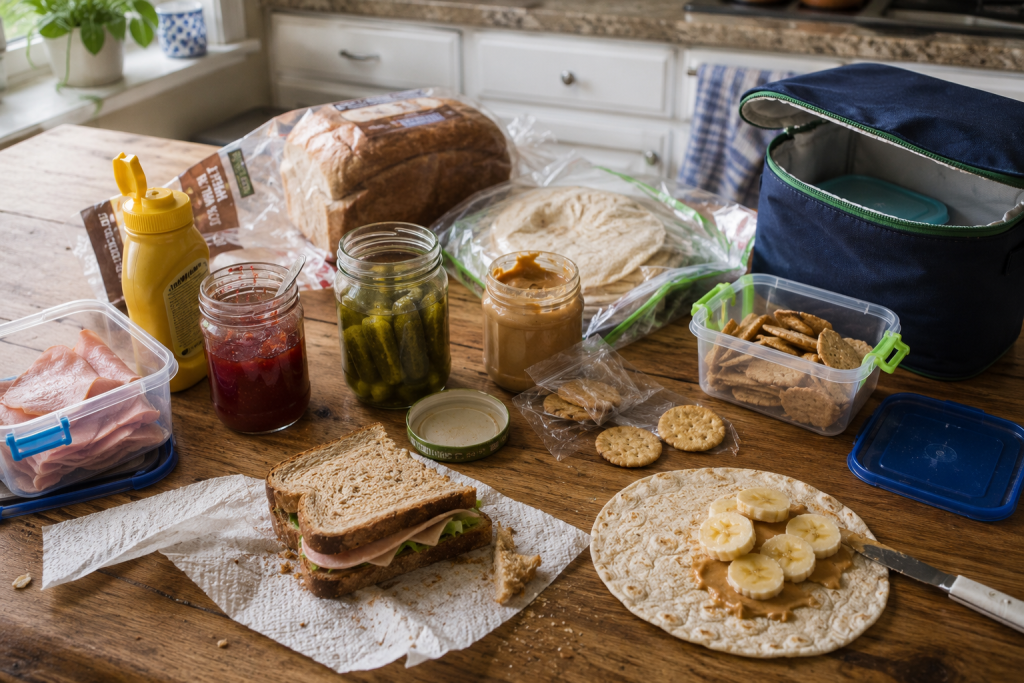
Make busy school mornings easier by keeping versatile pantry staples like bread, tortillas, crackers, spreads, and condiments ready for quick sandwiches, wraps, and lunchbox sides.

Make everyday groceries go further with versatile tortillas, crackers, cheese, and fresh produce for easy wraps, sandwiches, sides, lunches, and portioned snacks.
Fresh Produce Worth Keeping in the Lunch Rotation
For Birmingham families, the easiest produce choices are usually the ones that require little prep and pack well.
Good options to rotate include:
- Apples
- Pears
- Berries
- Cucumbers
- Bell peppers
- Carrots
- Grapes, when appropriate for the child’s age
Whole apples and pears are easy to grab and pack. Cucumbers and bell peppers can be cut into simple portions or added to wraps and sandwiches. Berries can be portioned into a small reusable container.
Late summer also overlaps with the harvest season for several fruits grown in Alabama, although availability can vary by store.
For more produce ideas, see fresh produce picks for the school week.
FAQ
What lunchbox staples should I keep on hand?
There is no universal list. Start with foods your household regularly uses across sandwiches, wraps, snacks, sides, leftovers, or other preferred lunches. Restock according to the lunches you expect to pack that week.
How much should I buy for the school week?
Consider the number of lunches you are packing, how often each ingredient appears in your rotation, what you already have, and how quickly refrigerated foods need to be used. Buy amounts that fit your household rather than following a fixed quantity for every family.
Which lunchbox foods need to stay cold?
Perishable foods such as deli meat, yogurt, cheese, eggs, hummus, and many cut or prepared foods need appropriate cold holding. When school refrigeration is unavailable, use an insulated lunch bag with at least two cold sources.
How long can opened deli meat stay refrigerated?
Opened packaged luncheon meat and deli-sliced luncheon meat can generally be kept for 3–5 days in a refrigerator maintained at 40°F or below.
What if I want to send leftovers hot?
Reheat leftovers to 165°F and transfer them to a preheated insulated food container. Keep the container closed until lunchtime.
Should I buy the same lunch staples every week?
Not necessarily. Consider what remains in the pantry, refrigerator, and freezer, what came home uneaten, your child’s current preferences, and the lunches you expect to pack before making the next restock list.
Restock for the Week Ahead
A useful lunchbox restock does not start with a universal list of groceries. It starts with what your household already has and the lunches you are actually likely to pack.
Check the pantry, refrigerator, and freezer. Note what is running low. Think about what your family will actually use. Then build a short grocery list with quantities that make sense for your household.
When you are ready to shop, check the Piggly Wiggly Birmingham weekly ad for current advertised offers. Product selection can vary by location, so you can also use the Piggly Wiggly Birmingham store locator to find a convenient store.