


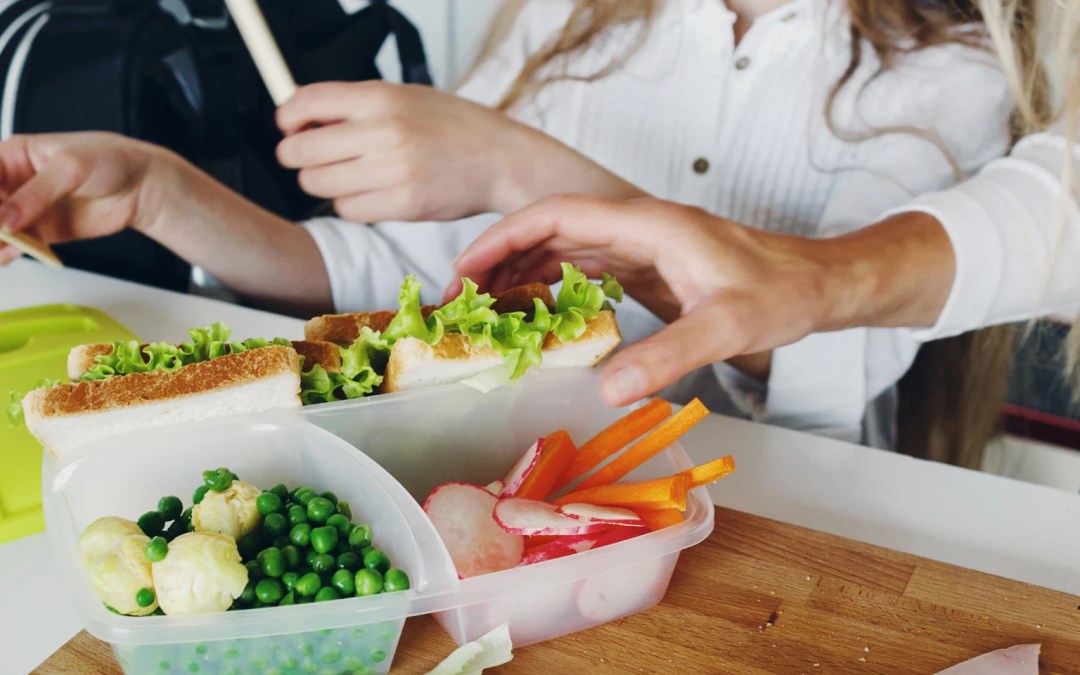
Finding school snacks that work is less about building a long list of foods a child “should” eat and more about finding a manageable group of options that fit the child, the school day, and the way the food needs to be packed.
For Birmingham parents and caregivers, that may mean starting with familiar foods, offering a little variety over time, and paying attention to what actually comes home. A snack that looks great when it leaves the kitchen is not especially useful if your child cannot open the container, does not have enough time to eat it, or consistently leaves it untouched.
The snack ideas below are options to try, not foods every child will like. Preferences, appetite, age, development, allergies, school policies, and daily schedules all matter.
What Do We Mean by a Nutritious School Snack?
There is no single snack combination that every child needs.
A practical approach is to offer variety across the week using foods from groups such as fruits, vegetables, grains, protein foods, and dairy or fortified soy alternatives.
That does not mean every snack needs to include several food groups. A piece of fruit may be enough for one child on one day, while another child may prefer something more substantial, such as fruit with yogurt or crackers with cheese.
The goal of this guide is to help you build a realistic rotation that works with your child’s needs rather than creating a perfect-looking lunchbox.
Start With Foods Your Child Already Knows
Familiar foods are a useful starting point.
Instead of introducing several new foods at once, begin with snacks your child already eats successfully at home. Then make small changes when you want more variety.
For example:
- Familiar berries can be packed alone one day and with yogurt another day.
- Crackers can be served alone or paired with cheese.
- Cucumber can be offered plain or with a familiar dip.
- A banana can rotate with a clementine, berries, or another fruit your child enjoys.
This approach keeps the snack routine recognizable while still giving you room to add variety.
A Simple Fruit Prep Routine
Rinse fresh produce under running water rather than using soap, detergent, or commercial produce wash. Prepare what you need, refrigerate pre-cut fruit, and portion it into containers that your child can manage at school.
If washing and cutting fruit the night before saves time in the morning, keep the prepared fruit refrigerated until it is time to pack the lunchbox.
For more ways to use produce during busy school weeks, see fresh produce ideas for the school week.
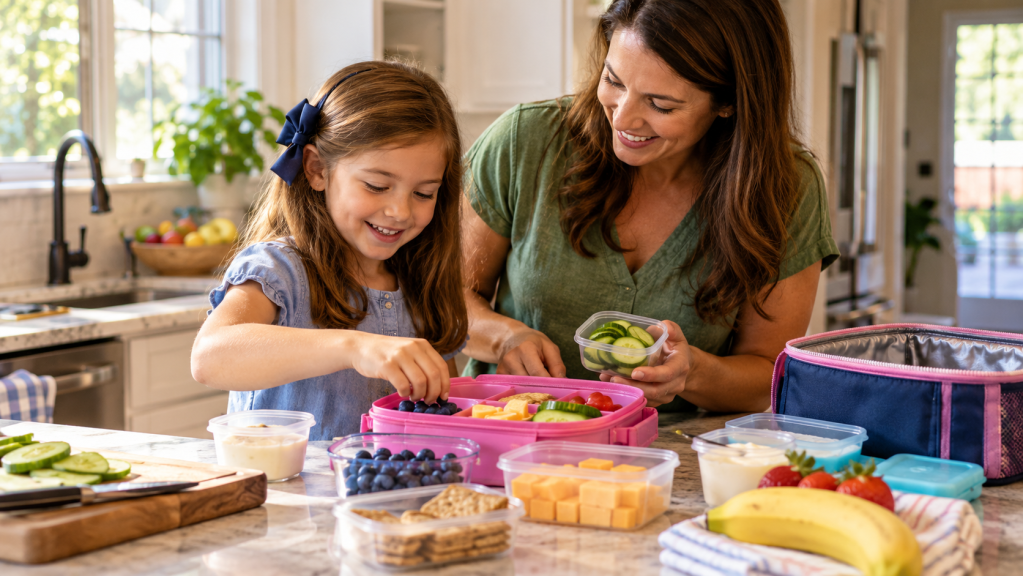
Build a Small School-Week Snack Rotation
You do not need five completely different snack plans for five school days.
A manageable rotation might include a fruit, a vegetable-and-dip option, a dairy or protein-containing option, a whole-grain pantry option, and one homemade or alternate choice.
Fruit Options to Try
Choose fruits your child enjoys and can comfortably manage at school.
Possibilities include:
- Berries
- Banana
- Clementine
- Appropriately prepared apple
- Appropriately prepared grapes
- Melon
Think about the child’s age and development when preparing fruit. Whole grapes and some hard raw fruits can present choking concerns for younger children and may need to be cut or prepared differently.
For more ideas for using fresh fruit and vegetables throughout the week, see Alabama seasonal produce for back-to-school meals.
Vegetable Options to Try
Vegetables are most useful in a snack rotation when they are foods the child will already consider eating.
Options might include:
- Cucumber slices
- Bell pepper strips
- Appropriately prepared carrots
- Snap peas
- Appropriately prepared tomatoes
- Small broccoli florets
They can be packed plain or with a familiar dip such as hummus or a yogurt-based dip when appropriate.
Age and development matter here too. Hard raw vegetables and whole cherry or grape tomatoes may require different preparation for younger children.
Dairy and Protein-Containing Options to Try
Depending on your child’s preferences and school rules, options may include:
- Yogurt
- Cheese
- Hard-boiled egg
- Hummus
- Refrigerated turkey or chicken roll-ups
These foods can be rotated rather than combined every day.
For example, yogurt might be paired with berries on one day, while cheese can be packed with crackers later in the week.
Whole-Grain and Pantry Options to Try
Pantry foods can make the rotation easier on mornings when there is little time for preparation.
Options may include:
- Whole-grain crackers
- Whole-grain mini pita
- Whole-grain cereal that works as a dry snack
- A homemade oat-based snack your child already likes
Check the ingredient list before describing a packaged cracker, bread, cereal, pita, or tortilla as whole grain. Package appearance alone does not establish that a food is whole grain.
Homemade Options to Rotate In
Homemade snacks can be useful, but they do not need to become another daily project.
A batch of banana-oat mini muffins or baked oat bars, for example, can be made ahead and divided into individual portions.
Choose recipes with ingredients and textures appropriate for your child, and keep school allergy policies in mind.
Use Substitutions Instead of Starting Over
A good snack system should be easy to adjust when your child does not like something, an ingredient runs out, or a school rule changes.
Try substitutions within the same general role:
- Berries → banana, clementine, melon, or another preferred fruit
- Cucumber → bell pepper or another familiar vegetable
- Hummus → another permitted familiar dip
- Yogurt → cheese or another appropriate refrigerated option
- Whole-grain crackers → mini pita or another familiar whole-grain food
- Hard-boiled egg → a permitted refrigerated protein your child enjoys
The substitution does not need to be nutritionally identical. The aim is to keep the rotation practical while maintaining variety over the course of the week.
Match the Snack to the School Day
What works at home does not always work in a classroom, cafeteria, or short snack period.
Before packing a snack, consider:
- How long does your child have to eat?
- Will the snack be eaten at a desk, cafeteria table, or outdoors?
- Does your child need to open the package or container without help?
- Does the food require a spoon or other utensil?
- Does it need to remain cold?
- Is the portion manageable in the time available?
- Does the school have food or allergy restrictions for the classroom?
A simple snack in an easy-to-open container can work better than a more elaborate option that takes too long to manage.
Choose Containers Your Child Can Open
One of the most useful tests happens before the lunchbox ever goes to school.
Ask your child to open the container, zipper, wrapper, or reusable pouch at home.
If they struggle with it at the kitchen table, they may also struggle with it during a short school snack period.
That feedback can help you choose:
- Easier lids
- Smaller reusable containers
- Packages with simpler openings
- Foods that require fewer separate pieces
- Utensils your child already knows how to use
Independence at snack time can be just as important as what is inside the container.
Pay Attention to What Comes Home Uneaten
An uneaten snack is useful information.
If the same food repeatedly comes home, consider why before simply packing it again.
Ask your child:
- Did you have enough time to eat it?
- Were you hungry at snack time?
- Was the food still the right temperature?
- Was it difficult to open?
- Was the portion too big?
- Did the texture change while it was packed?
- Do you still like this food?
- Is there something similar you would rather bring?
A child may like a food at home but dislike how it tastes or feels several hours after it has been packed.
Use those answers to adjust the rotation rather than treating an untouched snack as a failed choice.
Keep Perishable Snacks Cold
Packing conditions matter for foods that need refrigeration.
USDA food-safety guidance recommends using an insulated lunch bag with at least two cold sources to keep perishable lunches cold away from home. Examples include two frozen gel packs or a frozen gel pack combined with a frozen water bottle or other suitable frozen cold source. Review USDA guidance for keeping bag lunches safe.
Foods that may require cold holding include:
- Yogurt
- Cheese
- Hard-boiled eggs
- Hummus
- Refrigerated meat
- Cut fruit and other perishable prepared foods
If you prepare refrigerated snacks the night before, keep them refrigerated until it is time to pack the lunch bag.
Check Allergy Rules Every Time They Matter
School food policies can vary, so follow the policies for your child’s classroom and school rather than assuming a particular ingredient is permitted.
This is especially important for foods such as hummus, which commonly contains sesame in the form of tahini, as well as products containing peanuts, tree nuts, milk, eggs, wheat, soy, fish, or shellfish.
When your child has a diagnosed food allergy, follow the child’s individual allergy-management plan and school requirements.
A Simple Five-Day Rotation to Customize
Rather than treating this as a fixed menu, use it as a starting structure.
- Day 1: Familiar fruit
- Day 2: Familiar vegetable with a permitted dip
- Day 3: Yogurt, cheese, egg, or another preferred refrigerated option
- Day 4: Whole-grain crackers, pita, or another familiar pantry snack
- Day 5: Repeat the week’s most successful option or try one small variation
You can also repeat a dependable snack several times in the same week. Variety over time matters more than making every school day completely different.
Let Your Child Help Refine the Rotation
Children do not need complete control over what gets packed, but their feedback can make the snack routine much more useful.
Try giving two realistic choices:
- Berries or banana?
- Cucumber or bell pepper?
- Yogurt or cheese?
- Crackers or pita?
Then watch what happens after the lunchbox comes home.
Foods that are consistently eaten, easy to pack, easy to open, and practical to keep at the right temperature can stay in the regular rotation.
Foods that repeatedly return untouched can be adjusted, served differently, tried again later, or replaced.
For more guidance on food preferences and complete school lunches, read school lunch tips from a registered dietitian.
Shop for a Rotation, Not a Different Snack Every Day
A practical school-snack grocery list can stay relatively short.
Choose a few dependable foods your child already eats, add one or two alternatives, and look for ingredients that can serve more than one purpose during the week.
When planning your next grocery trip, check the Piggly Wiggly Birmingham weekly ad for current advertised offers. Because product selection can vary by store, use the Piggly Wiggly Birmingham store locator to find a convenient location and contact the store if you need to confirm a specific product.
For ideas focused on complete lunches rather than snacks, explore easy school lunch ideas.
FAQ
What makes a good school snack for a child?
A useful school snack fits the individual child and the conditions at school. Consider foods the child already enjoys, age and development, appetite, allergy needs, the time available to eat, whether refrigeration is needed, and whether the child can open the container independently.
Should every school snack include protein?
No. A child’s overall eating pattern matters more than forcing every snack into the same formula. USDA MyPlate encourages variety across fruits, vegetables, grains, protein foods, and dairy or fortified soy alternatives over time.
What should I do when snacks keep coming home uneaten?
Ask your child what happened. The issue may be the food itself, portion size, temperature, limited eating time, a difficult container, or changing preferences. Use that information to adjust the rotation.
Can I repeat the same snack during the week?
Yes. A dependable snack can appear more than once. A manageable rotation does not require a completely different option every day.
How should I pack yogurt, cheese, eggs, or hummus?
Keep perishable foods cold in an insulated lunch bag with appropriate cold sources. USDA recommends at least two cold sources for perishable bag lunches.
What about school allergy restrictions?
Follow your child’s school and classroom policies. If food allergies are relevant to your child, check packaged-food labels each time and follow the child’s individual allergy-management plan.
Build a Snack Rotation That Fits Your Child
The most useful lunchbox snacks are not necessarily the newest or most elaborate ones. They are the options that fit your child’s preferences, developmental needs, school schedule, food-safety needs, and ability to manage the snack independently.
Start with familiar foods. Add variety gradually. Notice what comes home. Ask your child what worked. Then use that feedback to build a smaller, dependable rotation that makes school mornings easier for your family.